There's a reason the Thailand–Cambodia–Vietnam loop is the most-traveled first route in Southeast Asia: in three weeks it gives you the region's three great civilizations, its best food, the temples of Angkor, the chaos and the calm, the beaches and the cities — and it does it for a daily budget most of Europe can't touch. It's the backbone of the old 'Banana Pancake Trail,' and it's popular for the simple reason that it works.
This is the version I'd hand a friend doing it for the first time: a clean one-way arc from Bangkok in the west to Hanoi in the northeast, so you never backtrack, with the legs that are worth doing overland marked as such and the long ones flagged for a cheap regional flight. Three weeks (21 days) is the sweet spot — enough to see the highlights of all three countries without the sprint that a two-week version becomes. I've routed it through eight bases, each one a place worth more than a single night.
Two honest framings up front. First, this is a highlights route, not a deep dive — you're sampling three countries, not mastering one; if you have more time, slow down rather than adding countries. Second, Southeast Asia rewards flexibility: buses run late, plans change, and the best days are often the unplanned ones. Book the fixed points (flights, Angkor, Halong cruise) and leave the rest loose. Here's the whole thing.
The Route at a Glance
The arc runs west-to-east across mainland Southeast Asia: start in Bangkok, head north to Chiang Mai, cross into Cambodia for Angkor and the capital, drop into southern Vietnam at Ho Chi Minh City, then work up the Vietnamese coast to the center (Hoi An) and the north (Hanoi and Halong Bay). You fly out of Hanoi. Most legs are short regional flights (cheap and frequent on AirAsia, Vietjet, and similar); a few are worth doing overland for the scenery and the experience. Book an open-jaw ticket — into Bangkok (BKK), out of Hanoi (HAN) — and you'll never retrace your steps.
| Days | Base | Country | Get there by |
|---|---|---|---|
| 1–4 | Bangkok | Thailand | Fly in (BKK) |
| 5–7 | Chiang Mai | Thailand | 1.2-hr flight or overnight train |
| 8–10 | Siem Reap (Angkor) | Cambodia | 1.5-hr flight from Bangkok/Chiang Mai |
| 11–12 | Phnom Penh | Cambodia | 6-hr bus or 45-min flight |
| 13–15 | Ho Chi Minh City | Vietnam | 1-hr flight from Phnom Penh |
| 16–18 | Hoi An / Da Nang | Vietnam | 1.5-hr flight (Da Nang airport) |
| 19–21 | Hanoi + Halong Bay | Vietnam | 1.3-hr flight; fly out (HAN) |
Search 'into Bangkok (BKK), out of Hanoi (HAN)' as one multi-city ticket — it costs about the same as a round trip and saves a long backtrack. The internal hops are cheap (often $40–90) on AirAsia, Vietjet, and Cambodia Angkor Air, but the lowest fares and the convenient times sell out, so book them once your dates are set rather than at the airport.
Days 1–4: Bangkok — The Sensory Deep End
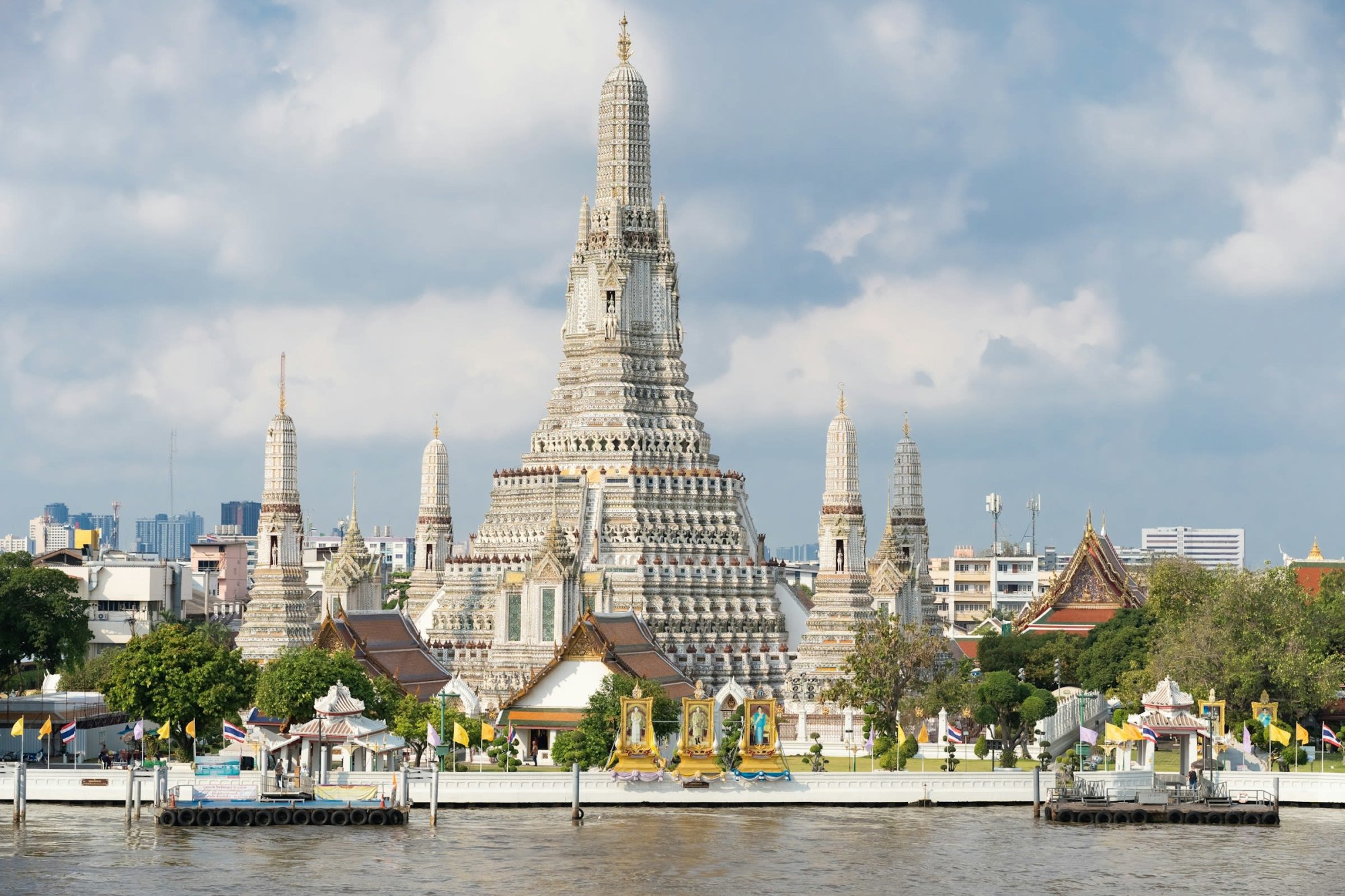
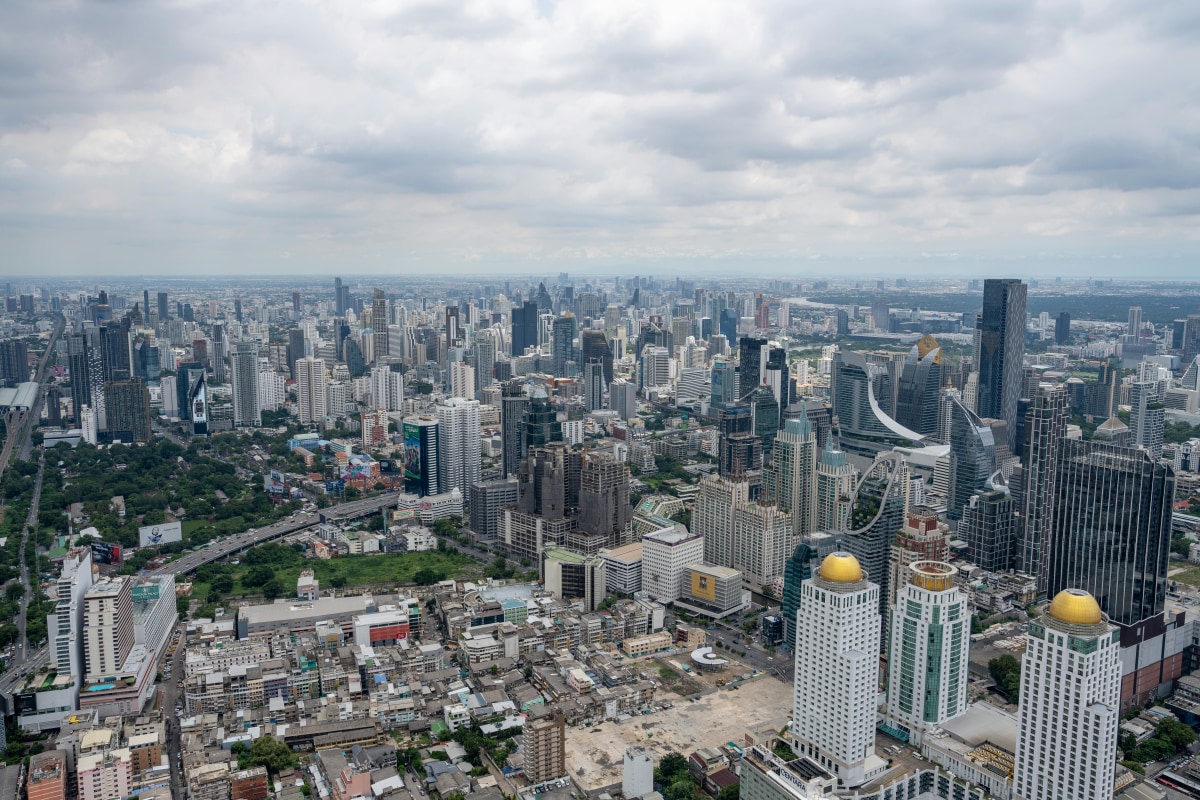
Bangkok is the right place to start because it eases you in while throwing you straight into the deep end: a modern airport and Skytrain, English widely understood, and ATMs everywhere — wrapped around a gloriously chaotic city of golden temples, canal boats, street-food carts, and rooftop bars. Give it four days. Do the big three temples (the Grand Palace and Wat Pho with its giant reclining Buddha, then Wat Arun across the river), take a longtail boat through the canals of Thonburi, eat your way through a street-food street like Yaowarat (Chinatown) at night, and balance the heat with an air-conditioned mall and a rooftop sundowner.
Practicalities: Thailand is visa-free for most Western passports for stays of 30–60 days. Get a Thai SIM at the airport, use the metered taxis or Grab (the local ride app) rather than haggling tuk-tuks for longer trips, and dress modestly for temples (covered shoulders and knees — they enforce it). The honest catch is the heat and the scams: the classic 'the temple is closed today, let me take you to a gem shop' tuk-tuk con still runs, so ignore anyone outside a sight who tells you it's shut.
Days 5–7: Chiang Mai — The Calmer North
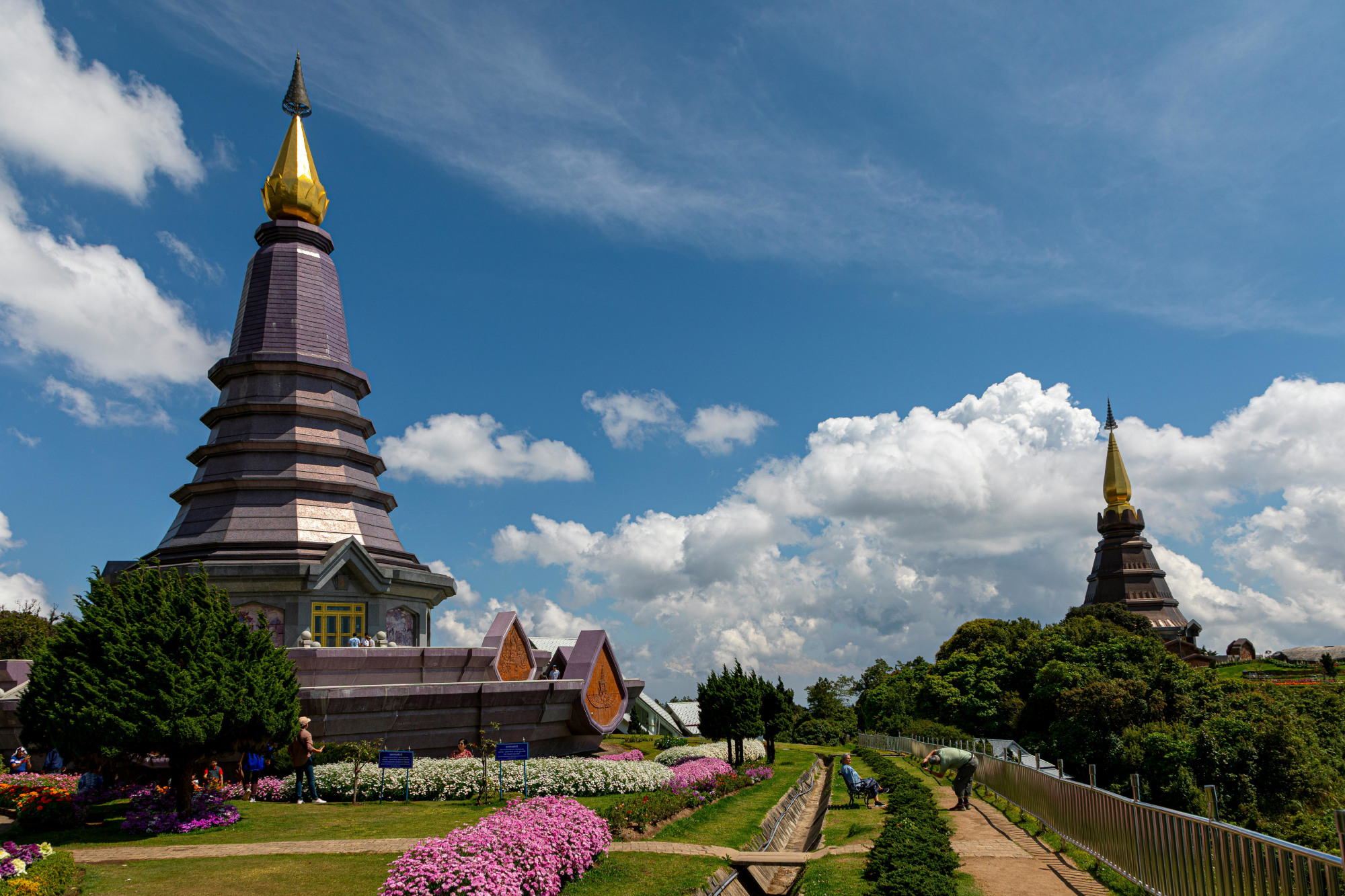
Fly or take the overnight train north to Chiang Mai, the laid-back cultural capital of the north and the counterweight to Bangkok's intensity. The old city is a walkable square moated grid packed with hundreds of temples; the surrounding hills hold the mountaintop temple of Doi Suthep, ethical elephant sanctuaries (choose a no-riding, observation-only one), and cooler air. Chiang Mai is also the region's best place to take a Thai cooking class and to wander a proper night market — the Sunday Walking Street is the big one. It's where the trip's pace finally drops.

From roughly late February to early April, farmers burn fields across northern Thailand and the Chiang Mai air quality drops sharply — sometimes to hazardous levels. If your trip falls in this window, consider shortening Chiang Mai or swapping it for an island. Outside burning season, the north is one of the highlights of the whole route.
Days 8–10: Siem Reap — The Temples of Angkor
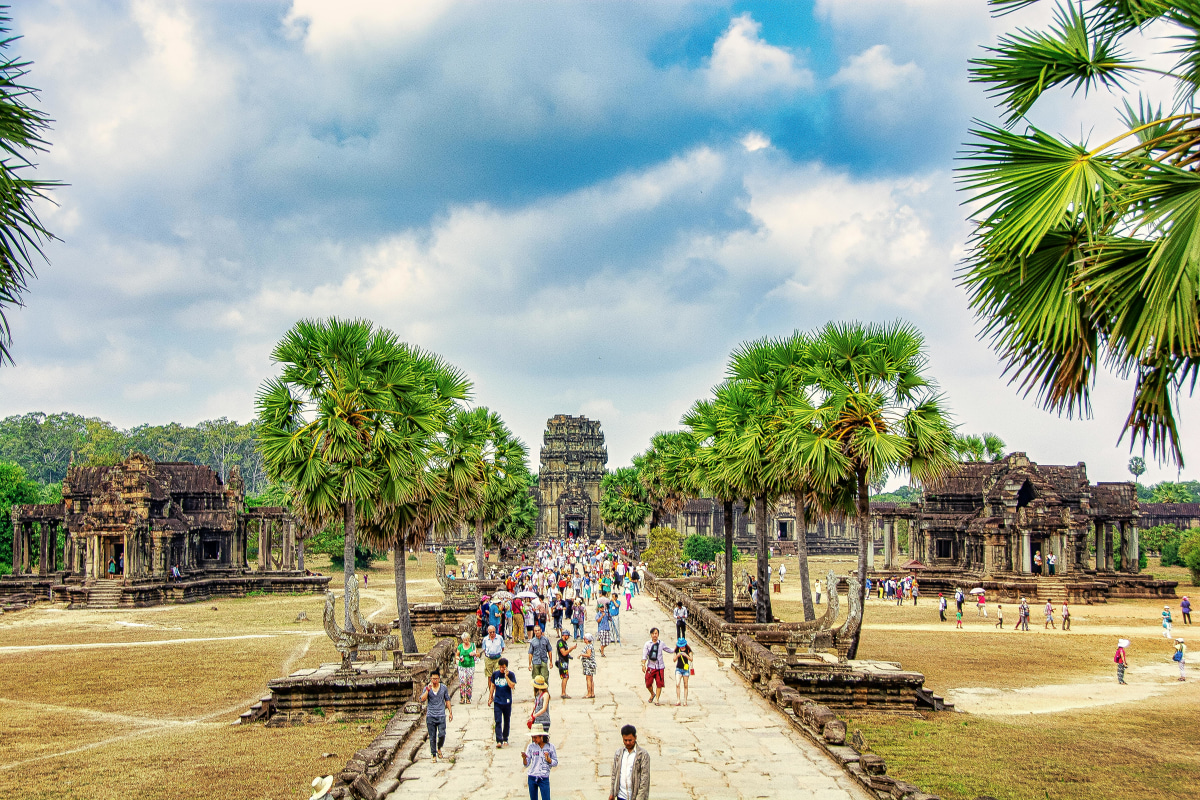
A short flight drops you in Siem Reap, the base for Angkor — the vast temple complex of the Khmer Empire and the single most spectacular sight on this route. Three days lets you do it properly: a sunrise at Angkor Wat itself, the tree-strangled ruins of Ta Prohm (the 'Tomb Raider' temple), the enormous stone faces of the Bayon at Angkor Thom, and a quieter outlying temple like Banteay Srei. Buy the three-day pass, hire a tuk-tuk driver for the day ($20–25), start at dawn to beat the heat and the crowds, and pace yourself — 'temple fatigue' is real after four hours in 35°C.
Beyond the temples, Siem Reap itself has grown into a fun base — Pub Street is touristy but a laugh, the night markets are good, and the Cambodian food (fish amok, lok lak) is underrated. Cambodia requires a visa for most nationalities, but it's a simple e-visa online or visa-on-arrival; bring a passport photo and USD cash (Cambodia runs largely on US dollars, with riel given as small change).
Days 11–12: Phnom Penh — History You Should Face
Cambodia's capital is a shorter stop but an important one. Phnom Penh is a riverside city of French-colonial architecture and a glittering Royal Palace and Silver Pagoda — but the reason to come is to confront the recent past honestly. The Tuol Sleng Genocide Museum (a former school turned Khmer Rouge prison, S-21) and the Choeung Ek Killing Fields are harrowing, essential, and explain the country you've been traveling through. It's a heavy day, deliberately so. Balance it with a sunset drink on the Sisowath Quay riverfront where the Mekong and Tonlé Sap rivers meet.

If you're tight on time, you can skip Phnom Penh and fly Siem Reap straight to Ho Chi Minh City — but it's worth the two days for the context it gives the whole region. From Phnom Penh, a short flight (or a longer bus crossing the Bavet–Moc Bai border) takes you into Vietnam.
Days 13–15: Ho Chi Minh City — Energy and the Mekong
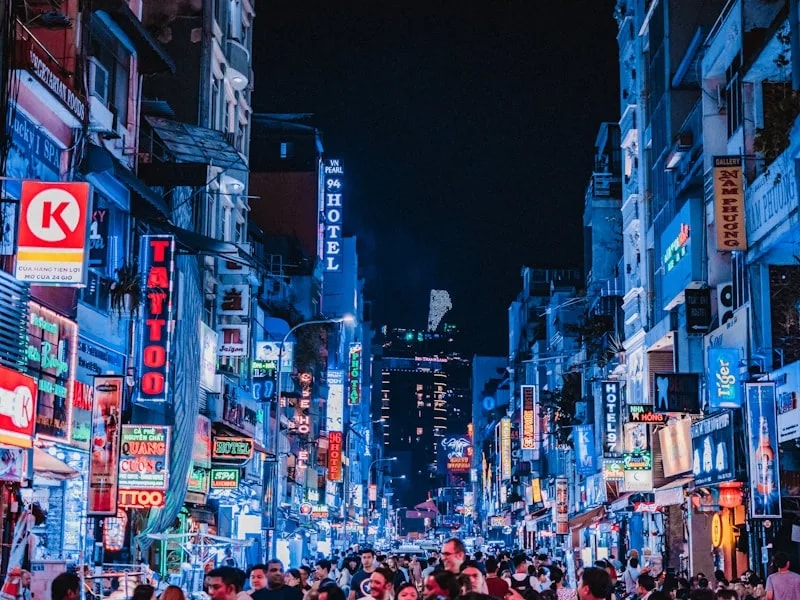
Ho Chi Minh City (still widely called Saigon) is Vietnam's roaring commercial heart — a city of millions of motorbikes, French-colonial landmarks, rooftop bars, and some of the best street food on the trip (a bowl of pho, a banh mi from a cart, an egg coffee). Spend a day in District 1 (the Notre-Dame Cathedral, the old Central Post Office, the War Remnants Museum — confronting but important), a day on a Mekong Delta tour to the floating markets and coconut-candy workshops, and an evening just learning to cross the street (the trick: walk slowly and steadily, and let the motorbikes flow around you).

Vietnam visa rules vary by nationality — many Western passports get a visa exemption for short stays or use a straightforward e-visa, so check your specific case before you fly. The Cu Chi Tunnels (the Viet Cong tunnel network) are a popular half-day trip from the city if the war history interests you.
Days 16–18: Hoi An — The Trip's Prettiest Pause
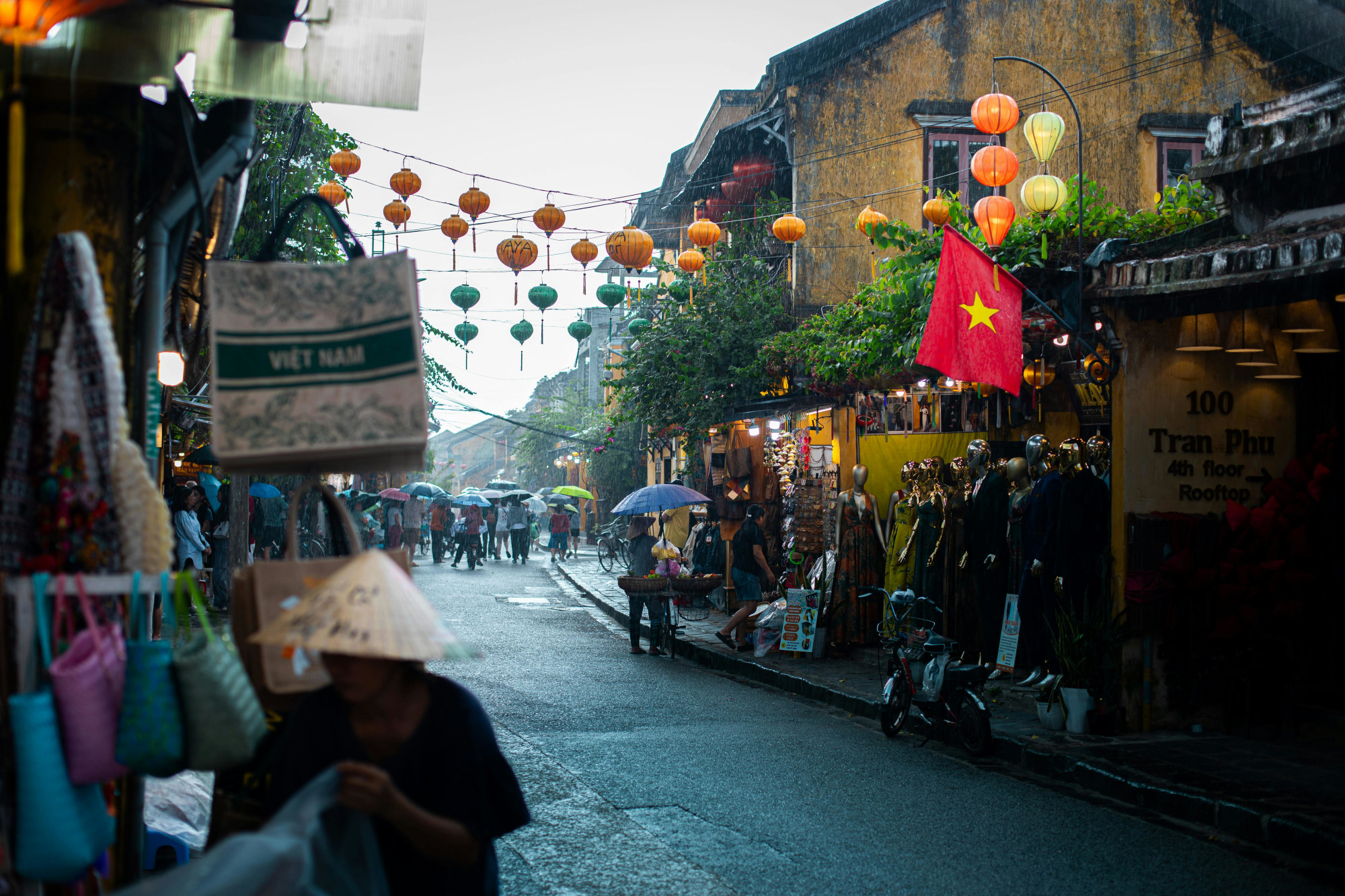
Fly to Da Nang and transfer 45 minutes to Hoi An, and the pace changes again. Hoi An is a beautifully preserved former trading port — a UNESCO old town of mustard-yellow merchant houses, a Japanese covered bridge, and thousands of silk lanterns that glow over the river at night. It's the most charming town on the route and a place to slow right down: get clothes tailor-made (Hoi An is famous for fast, cheap bespoke tailoring), cycle out to the beach or the rice paddies, take another cooking class, and float a paper lantern on the river after dark. Da Nang next door adds a long beach and the famous Golden Bridge held up by giant stone hands.

Days 19–21: Hanoi & Halong Bay — The Finale
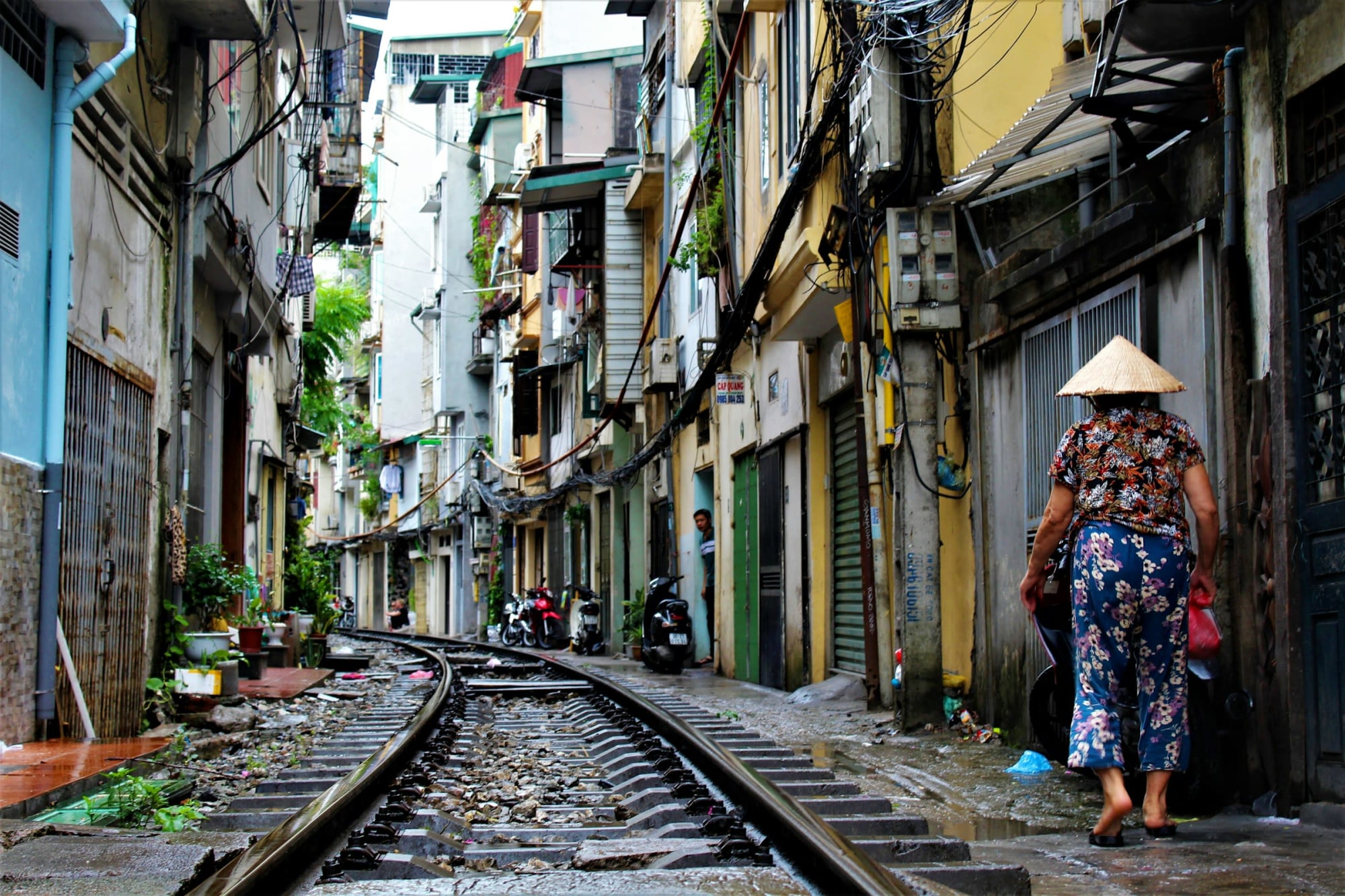
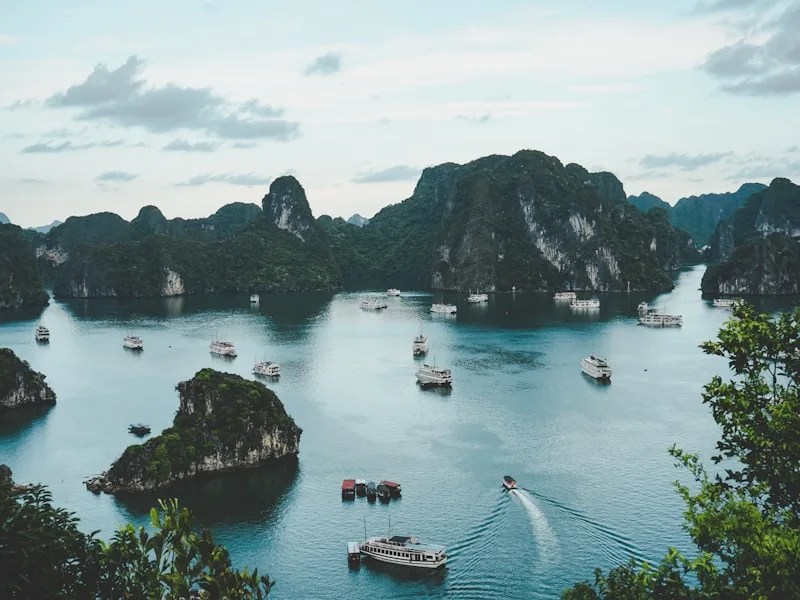
End in the north. Hanoi, Vietnam's thousand-year-old capital, is denser, older, and more atmospheric than Saigon — the tangled Old Quarter, the lake-and-temple calm of Hoan Kiem, the street-food institutions (bun cha, the grilled-pork-and-noodle dish Obama famously ate here), and the ritual of egg coffee in a hidden upstairs café. Give it a day or two, then take the highlight finale: an overnight cruise on Halong Bay, the UNESCO seascape of thousands of limestone karst islands rising out of jade-green water, about 2.5 hours east by road.

Book a reputable overnight Halong cruise (the cheapest operators cut corners on safety and crowds — read recent reviews) for kayaking among the karsts, a cave visit, and sunrise tai chi on the deck. Then it's back to Hanoi to fly home from Noi Bai (HAN). If you have spare days, Sapa's rice terraces in the far north or a beach stop are the natural extensions.
Money, Visas, and Logistics
Three countries, three currencies: the Thai baht, the Cambodian riel (but US dollars are used everywhere — carry clean USD notes), and the Vietnamese dong (whose many zeros take a day to get used to). Pull cash from bank ATMs as you go, carry some USD as a backup, and decline the ATM's currency-conversion offer. Each country has cheap, fast SIM cards or eSIMs at the airport. Grab (the regional ride app) works in Thailand and Vietnam and saves you from haggling.
| Country | Currency | Visa (most Western passports) |
|---|---|---|
| Thailand | Baht (THB) | Visa-free 30–60 days |
| Cambodia | Riel + USD | e-visa or visa on arrival (~$30) |
| Vietnam | Dong (VND) | Exemption or e-visa — check your nationality |
Southeast Asia is one of the best-value regions on earth. A comfortable mid-range budget runs about $45–65 per person per day — a clean private room, eating mostly local (street food and casual restaurants), paying for the major sights and tours, and moving by budget flight and bus. Backpackers using hostels and street food do it for $30–40/day; the internal flights and the Angkor pass and Halong cruise are the main one-off costs to budget separately.
When to Go and How to Adapt the Route
The broad sweet spot for this whole route is November to March — the dry, cooler season across all three countries. April is intensely hot (and is Thai/Khmer/Lao New Year — fun water-fight festivals, but everything's busy). The May–October wet season brings afternoon downpours rather than all-day rain and is the cheaper, greener, less-crowded time to go; just note central Vietnam (Hoi An) can flood around October–November. Because the route spans a big area, no single month is perfect everywhere — but November–February is the closest thing to it.
| If you have… | Adapt by… |
|---|---|
| Only 2 weeks | Cut Phnom Penh and one of Hoi An/Hanoi |
| A 4th week | Add Thai islands (Krabi, Phuket) or Laos (Luang Prabang) |
| Beach priority | Swap Chiang Mai for a Thai island, add Da Nang beach time |
| History focus | Keep Phnom Penh; add the Cu Chi Tunnels and DMZ |