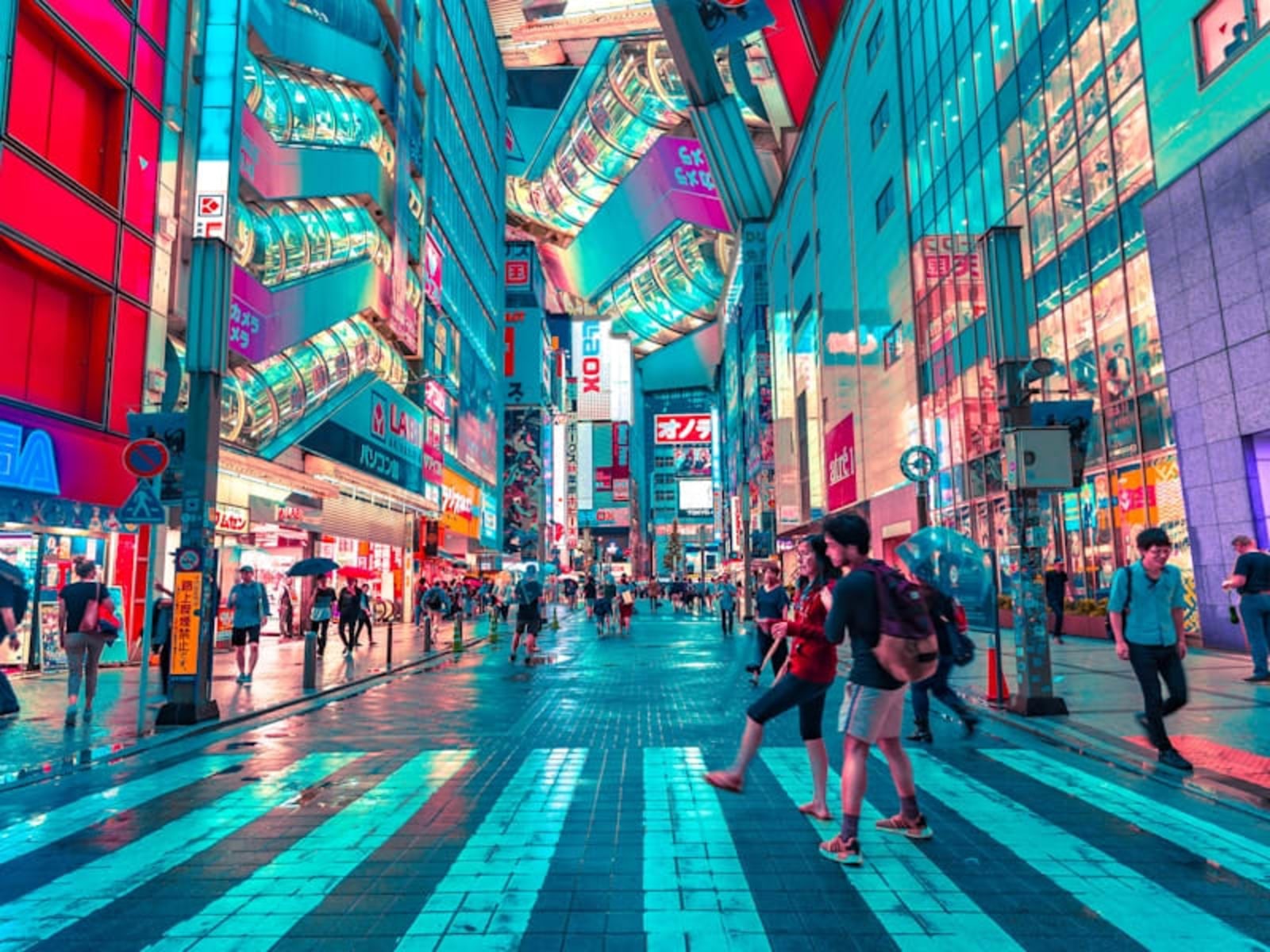
Same country, completely different rhythms. Tokyo is a 14-million-person megacity that runs on quiet efficiency — trains arrive within a 20-second window, queues form themselves, and the loudest sound on a packed Yamanote line is sometimes a paper bag. Osaka, three hours southwest by bullet train, is the country's other personality: a 19-million-person metro that talks loudly, eats constantly, and rolls its eyes at Tokyo's politeness.
If you've got one trip to Japan and you're choosing where to base yourself, the answer isn't obvious. Both cities have world-class food, deep history nearby, and great connectivity. But they reward different travelers. Tokyo is for people who love watching a city work. Osaka is for people who want to step into the city's mouth.
I've spent weeks in both. This guide is an honest side-by-side — what each city actually feels like, where to sleep, what you'll spend, and the kind of trip each one delivers. No tourism-board polish.
First Impressions: Order vs. Energy
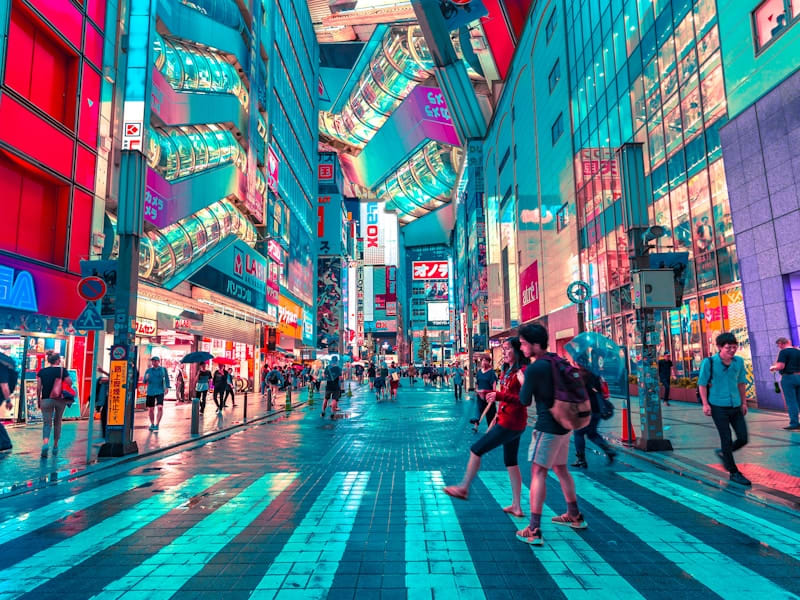
Tokyo lands on you slowly. You arrive at Narita or Haneda, take the Skyliner or the Keikyu line, and an hour later you're standing in a station that feels less like infrastructure and more like a small underground city — basement-level shopping malls, restaurant alleys, a Krispy Kreme, a stationery floor. The volume outside is restrained: cars don't honk, conversations on the train happen in whispers, and even the famous Shibuya Scramble — a thousand people crossing in one wave — feels strangely choreographed. Tokyo's energy is high, but it's compressed. The city is dense enough that 14 million people share the same air without bumping into each other, and the social rule that holds it together is consideration. You feel it as a tourist. You're handed your change with two hands. Your taxi driver wears white gloves. Your conbini receipt comes in a tiny plastic tray.

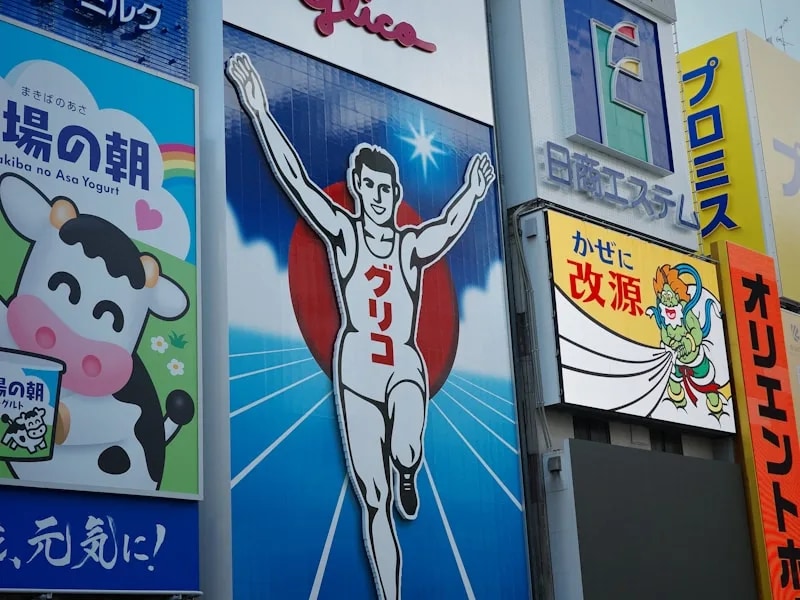
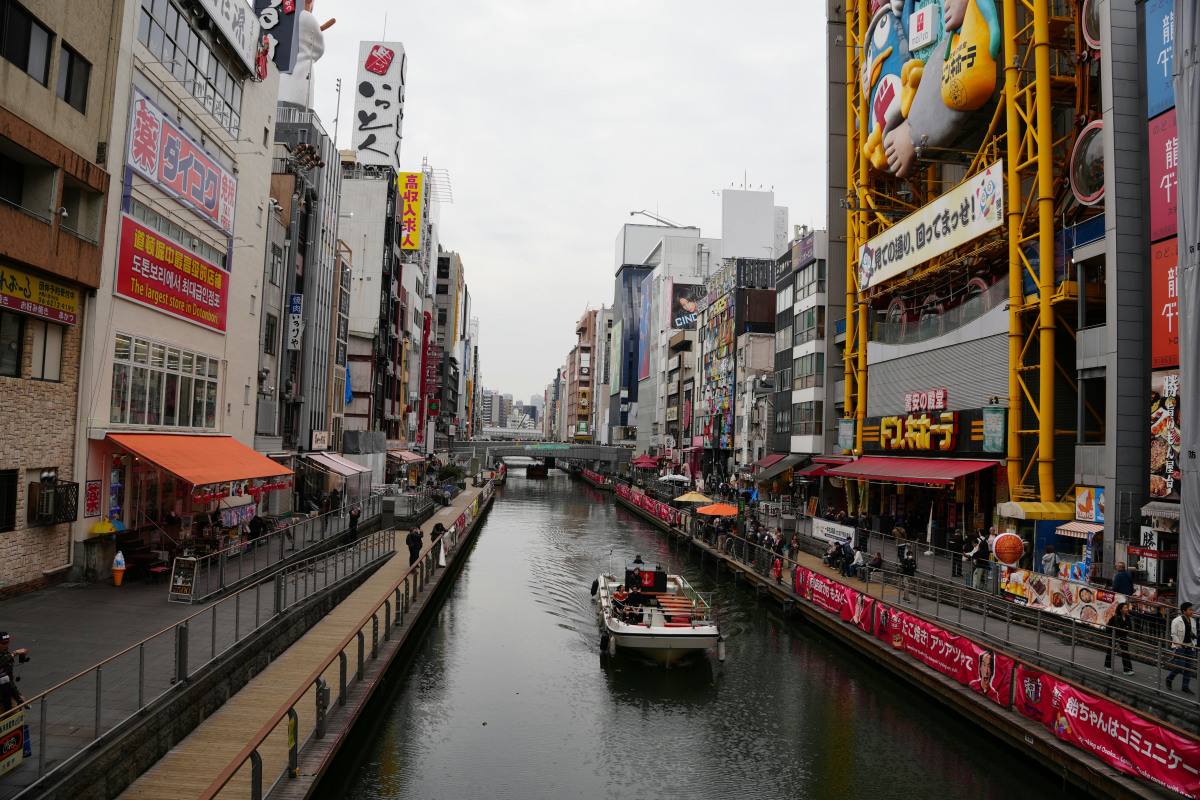
Osaka does not whisper. Step out of Shin-Osaka into the city proper and you'll hear it before you see it: a guy hawking takoyaki at full volume, an older woman calling across a tram stop to her friend, somebody laughing too loud on a Friday afternoon. Locals will tell you Osakans are warmer, faster to joke, faster to recommend a restaurant, faster to make eye contact. It's true. The Dotonbori canal at night, with its giant mechanical crab sign and Glico running man, looks less like a tourist trap and more like the city's actual personality turned up to 11 — and that personality is: 'come eat, stop being polite.' Where Tokyo glamorizes restraint, Osaka glamorizes appetite.
The Food Question: Refinement vs. Indulgence
Tokyo holds more Michelin stars than any other city on earth — over 180 starred restaurants as of the most recent guide, more than Paris and New York combined. The food culture is one of refinement, repetition, and quiet mastery. Sushi counters where a single chef has been making the same nigiri for forty years. Tempura shops where the oil temperature is monitored to within a degree. Ramen shops with a queue around the block at 11 a.m. and a sign that says 'NO PHOTOS, NO CONVERSATION, NO LEFTOVERS.' The Tokyo food experience, at its best, feels like watching someone do one thing better than anyone else alive.
Osaka calls itself the kitchen of Japan — Tenka no Daidokoro — and the city's relationship with food is loud, communal, and deeply unpretentious. The local greeting isn't 'how are you' but moukarimakka — 'are you making money?' — and the standard goodbye is meshi demo ikou — 'let's go eat.' Osaka invented takoyaki (octopus balls), okonomiyaki (savory cabbage pancakes), and kushikatsu (deep-fried skewers, never double-dipped in the communal sauce). The street stall in front of you costs the equivalent of a few dollars and has been refined over three generations. Where Tokyo's food culture rewards stillness, Osaka's rewards leaning in.
Osakans have a word — kuidaore — that translates roughly as 'eat yourself bankrupt.' It's a city built on that philosophy.
Five things to eat in each city
- Tokyo — Tsukiji outer market sushi for breakfast (the inner market moved to Toyosu, but the outer market still serves the city's best 7 a.m. sashimi)
- Tokyo — Tonkatsu at Tonki in Meguro, an 85-year-old institution that does one thing and does it perfectly
- Tokyo — A standing soba at any train station — under $5, eaten in 3 minutes, somehow still excellent
- Tokyo — A neighborhood izakaya in Ebisu or Nakameguro for the night-out version of Japanese food
- Tokyo — Coffee at a kissaten (old-school cafe) — try Chatei Hatou in Shibuya, where pour-overs take 12 minutes
- Osaka — Takoyaki from a Dotonbori stall, eaten standing up, accepting that the first one will burn your mouth
- Osaka — Okonomiyaki at a counter where you cook it yourself on the hot plate built into the table
- Osaka — Kushikatsu in Shinsekai — the one neighborhood where 'no double-dipping' is a literal posted sign
- Osaka — Kuromon Ichiba market for sashimi by weight, wagyu skewers grilled in front of you, fresh uni on the half-shell
- Osaka — A late-night ramen at Kinryu, where you sit on the floor and the broth is so dark with garlic it stains the bowl
Neighborhoods That Define Each City
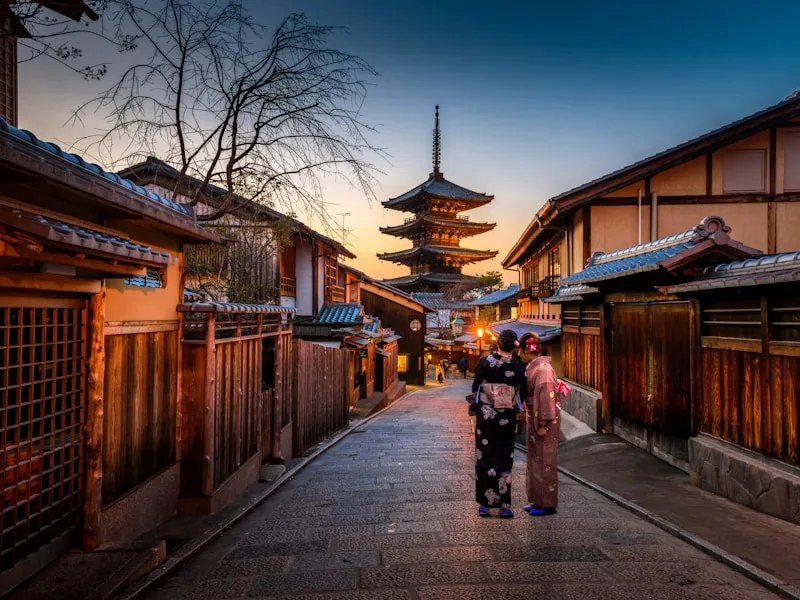
Tokyo is not one city — it's thirteen of them stitched together by the Yamanote loop line. Shibuya is the version of Tokyo most tourists picture: neon, pedestrians, Hachiko statue, the famous crossing. Shinjuku is Shibuya scaled up — bigger station, bigger department stores, the entire seedy-glamorous Kabukicho red-light zone tucked behind a single block. Asakusa is the old-Tokyo version, where you can see Senso-ji temple and walk the Nakamise shopping street that's been selling the same rice crackers since the Edo period. Ginza is the polished, expensive, suit-and-tie Tokyo — flagship Uniqlo, six floors of stationery at Itoya, sushi counters where dinner is $300 minimum.
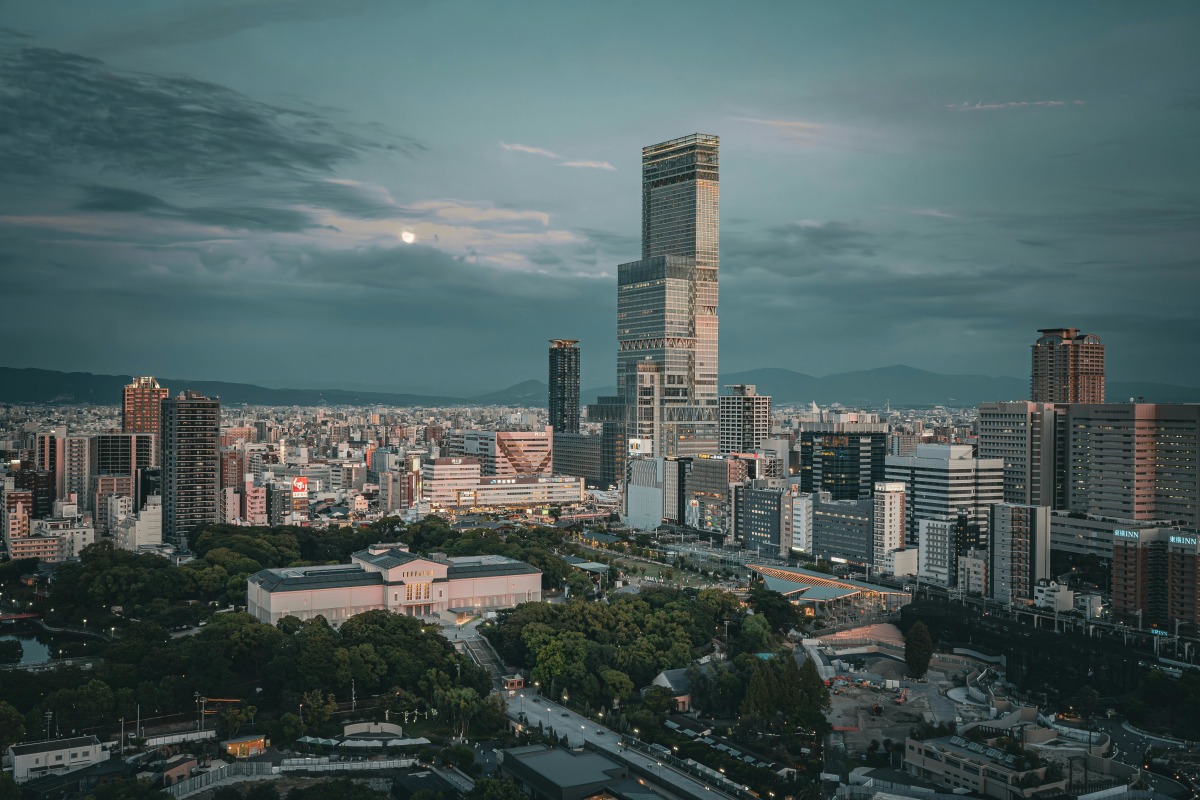
Osaka's neighborhood map is smaller and easier to read. Namba is the central tourist core — Dotonbori, Shinsaibashi shopping arcade, the Don Quijote Ferris wheel sticking out of a department store. Umeda is the northern business hub, where the office workers go for after-hours drinks and Hankyu department store has the country's best food hall (basement two, full sashimi platters, free samples). Tennoji is south — older, slightly rougher, home to Shitenno-ji temple (Japan's first Buddhist temple, founded in 593) and the Abeno Harukas skyscraper. Shinsekai, just below Tennoji, is the working-class kushikatsu district where the towering Tsutenkaku tower presides over streets that haven't changed much since the postwar.

Budget Reality: How Much Will You Spend?
Both cities are cheaper than people think — the yen has been weak for two years and food, in particular, is a bargain compared to any major US or European city. But Tokyo runs about 10–15% pricier than Osaka across the board, mostly because of hotels. Central Tokyo (Shinjuku, Shibuya, Ginza) starts around $130/night for a clean, narrow business hotel room. Central Osaka starts around $90 for the same. Food is roughly equal: a great bowl of ramen is $8 in both cities, a counter-sushi dinner is $40–80, and a convenience-store breakfast is $5. Where Tokyo wins on price is transit — the subway is cheaper per ride than Osaka's because Tokyo's network is denser. Where Osaka wins is everything else.
| Category | Tokyo (USD/day) | Osaka (USD/day) |
|---|---|---|
| Hotel — mid-range 3★ | $130–180 | $85–130 |
| Food (3 meals + snacks) | $45–70 | $40–60 |
| Local transit | $8–14 | $10–16 |
| Attractions / entry fees | $15–30 | $12–25 |
| Coffee / casual drinks | $10–20 | $10–18 |
| Total per day (mid-range) | $210–315 | $155–250 |
| 5-day trip estimate | $1,050–1,575 | $775–1,250 |
The 7-day JR Pass jumped to roughly $345. It now only pays off if you do at least one Tokyo–Osaka–Tokyo round trip plus side trips. A Tokyo-only week or an Osaka-only week is cheaper without it — single Shinkansen tickets and IC cards (Suica or Icoca) win on cost. Run the math before you buy.
Day-by-Day Vibes: A Honest 4-Day Comparison
Four days in Tokyo feels like four chapters in different books. Day 1 you're in Shibuya and Harajuku, jet-lagged, photographing the crossing and the takeshita-dori weirdness. Day 2 you do the old city — Asakusa, Ueno park, the Tokyo National Museum, maybe a sumo morning practice viewing if you're lucky. Day 3 you go neighborhood-deep: Yanaka for cats and old streets, Shimokitazawa for vintage clothes, Nakameguro for the canal. Day 4 you do a day trip — Kamakura for the Great Buddha, Nikko for the temples, or Hakone for the onsen and Mt. Fuji view. By the end you feel like you've sampled five different cities and you still haven't been to half of them.
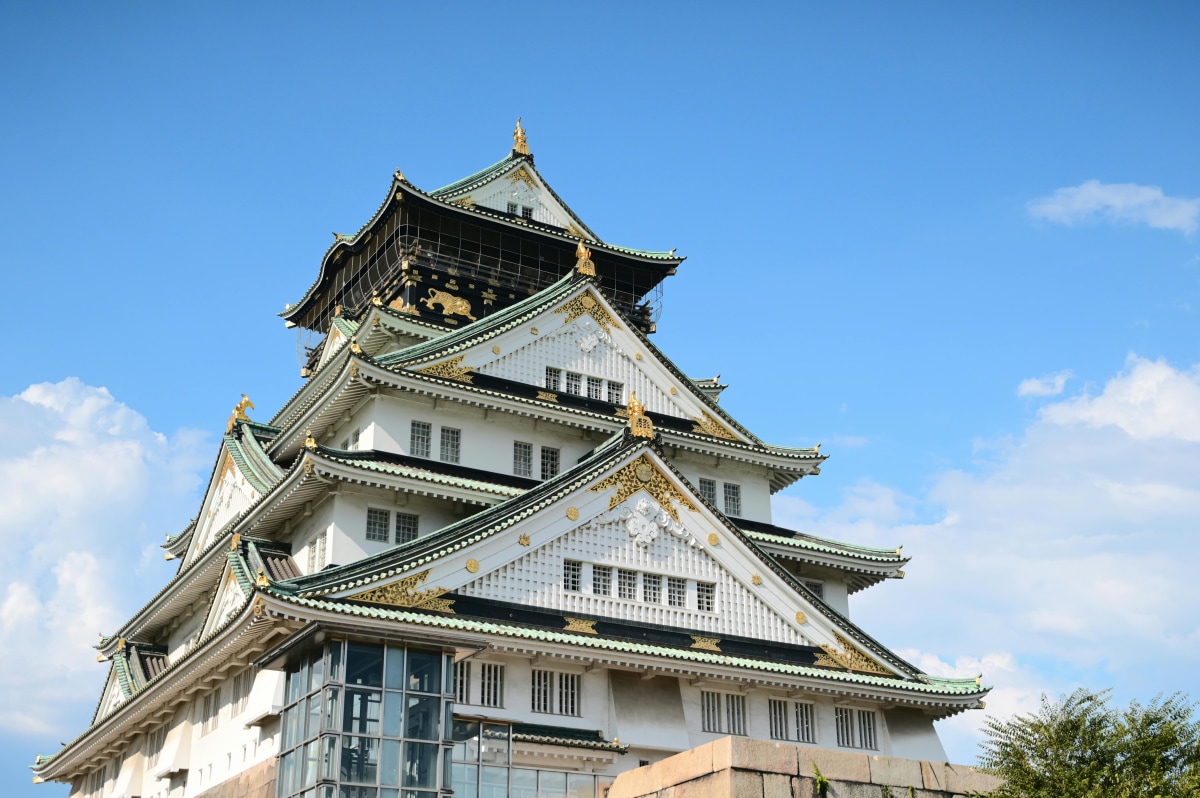
Four days in Osaka feels different. Day 1 you do Dotonbori and eat your way through it, ending with kushikatsu at midnight in Shinsekai. Day 2 you go to Osaka Castle in the morning, then take the 14-minute train to Kyoto and spend the afternoon in Gion and the Philosopher's Path. Day 3 you do another day trip — Nara for the deer and Todai-ji, or Kobe for beef and the harbor. Day 4 you go back to Dotonbori because you have unfinished business with the takoyaki place near the bridge. Tokyo gives you breadth. Osaka gives you Kansai — Osaka itself plus Kyoto, Nara, Kobe, and Himeji all within an hour. For a one-week first trip to Japan, that flexibility matters more than people realize.
Practical Comparison Table
| Tokyo | Osaka | |
|---|---|---|
| Vibe | Polished, dense, restrained | Loud, warm, food-obsessed |
| Food | Michelin density, refinement | Street food, comfort, indulgence |
| Shopping | Global, deep, expensive | Local, varied, cheaper |
| Budget (mid-range/day) | $210–315 | $155–250 |
| Best airport | Haneda (HND) — closer, better | Kansai (KIX) — direct, easy |
| English signage | Strong, even in side streets | Decent in center, thinner elsewhere |
| Crowd density | Higher year-round | High in center, calmer overall |
| Best for | First-time Japan, urban explorers | Food trips, Kansai base, second visits |
The Verdict: Who Tokyo Is For, Who Osaka Is For
Tokyo is the right first trip if you want to feel like you're inside the future of cities — if you like watching urban systems work, if you want neighborhood density and variety, if you read about Japanese culture and want the version that exports itself. Tokyo is also better for solo travelers who want anonymity, for shoppers, for design and architecture obsessives, and for people who care about Michelin stars. It is the wrong first trip if you find megacities exhausting, if you don't want to spend 45 minutes a day on trains, or if your priority is being somewhere where the local culture comes at you instead of you having to go find it.
Osaka is the right base if you care about food more than skyline, if you want a regional trip (Osaka + Kyoto + Nara + Kobe) rather than a single-city trip, if you want hotels that cost less and meals that are louder, and if you're the kind of traveler who likes to find one neighborhood and just sit in it. Osaka is also the right base for a second trip to Japan — after you've done Tokyo and want to see the other personality. It is the wrong base if you came for the iconic Japan-fantasy version (Tokyo Tower, Shinjuku neon, Shibuya crossing, fashion district) — Osaka simply doesn't have that.
Most travelers should do both. A 7–10 day first trip with the loop Tokyo → Kyoto → Osaka (with Kyoto in the middle, Osaka as the finale) is hard to beat. You get the megacity, the traditional capital, and the food capital, with under three hours of Shinkansen total. If you only have 5 days or fewer, pick one — and pick Tokyo if it's your first time in Asia, Osaka if it's not.