Japan 🌤️ 21°C · Now
Japan's food capital
Japan 🌤️ 21°C · Now
Japan's food capital Osaka
Japan

Osaka at a glance
As of 2026, Osaka travel is best in Mar, Apr, Oct, Nov, from about $87/day (budget, ex-flights), with a 3-day itinerary. Top sight: Osaka Castle.
$87+
Budget tier · excl. flights
From major hubs
KIX (Kansai International)
Visa-free 90 days
For most Western passports
$1 ≈ ¥159
JPY · indicative rate
Mar, Apr, Oct, Nov
Currently Jun
Humid subtropical (hot summer
Now 🌤️ 21°C
01:23
JST (UTC+9, no daylight saving)
Japanese
Osaka dialect — 'Osaka-ben'
Why visit Osaka?
Osaka is Japan's second-largest city, but the vibe is the opposite of Tokyo. Locals call their city kuidaore — literally "eat until you fall over." Walk through Dotonbori once at night and the nickname makes complete sense.
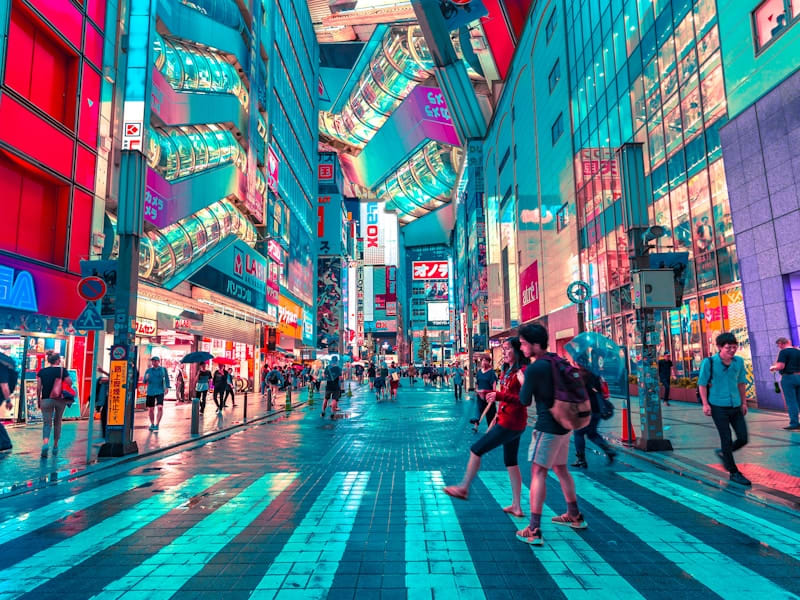
Dotonbori is Osaka concentrated. The Glico running-man billboard, the giant moving crab sign, takoyaki vendors flipping octopus balls in cast-iron molds, and a canal lit by a wall of neon — it's all packed into about three blocks. The signature street foods are takoyaki ($3.30 / ¥500 for 6 balls), okonomiyaki ($5–10 / ¥750–1,500 a plate), kushikatsu ($0.65–2 / ¥100–300 per skewer), and ikayaki (grilled squid). Most stalls are walk-up; sit-down places fill up by 7 PM.
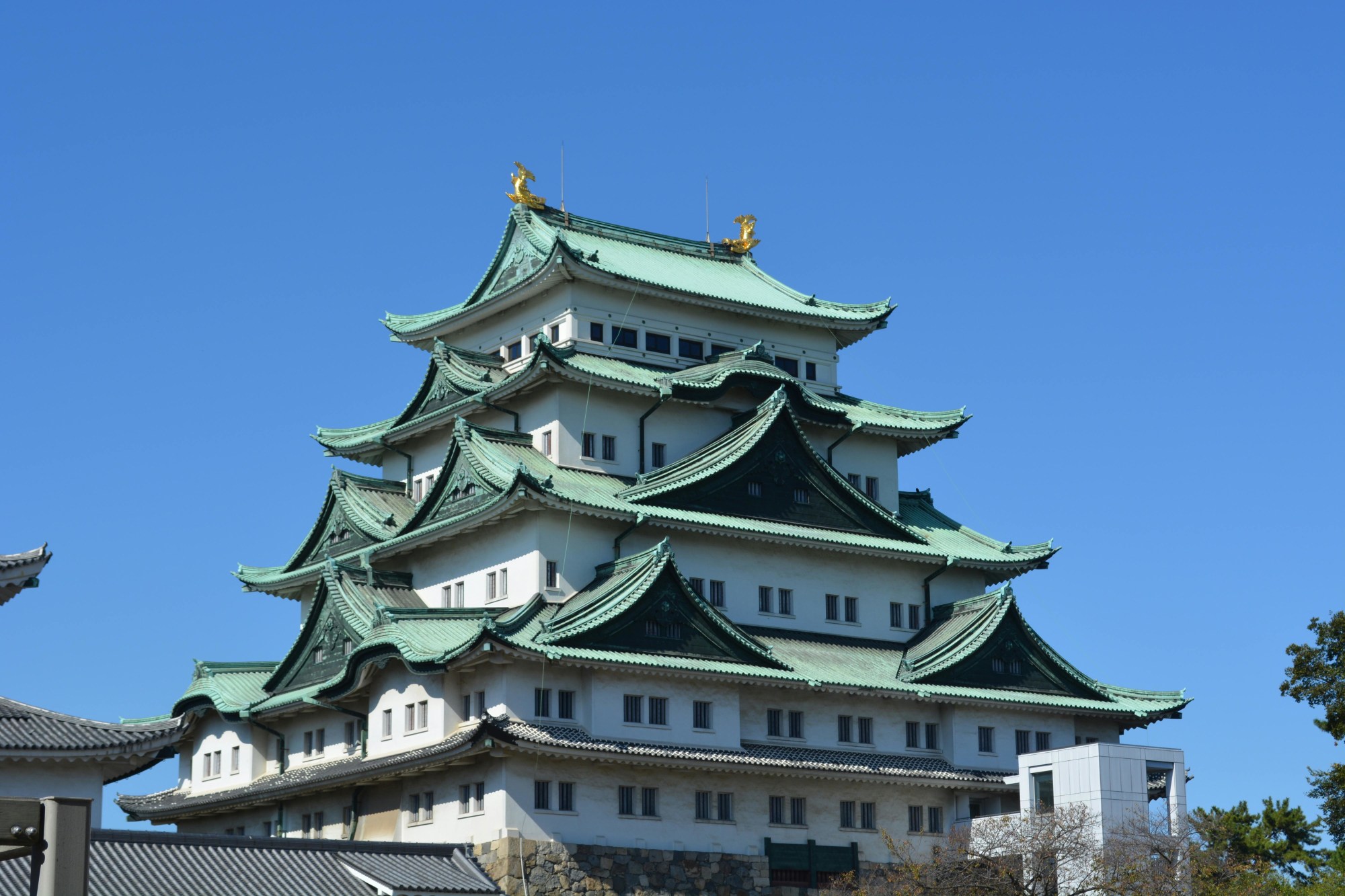
Osaka Castle was built in 1583 by Toyotomi Hideyoshi, the warlord who briefly unified Japan. The current keep is a 1931 reconstruction housing a history museum, but the 8th-floor observation deck gives a 360° view of central Osaka. Entry is $4 / ¥600. In late March and early April, 3,000 cherry trees ring the moat — one of the top three hanami spots in Japan. Nishinomaru Garden ($1.30 / ¥200) is the photo angle that captures both the cherries and the keep in one frame.
Universal Studios Japan opened the Super Nintendo World expansion in 2021, and it's now widely considered the best theme park in Japan. The Mario Kart AR ride and Harry Potter Forbidden Journey are the must-rides. Day passes run $57–66 / ¥8,600–9,800. The catch is wait times: even on weekdays, top rides hit 2-hour queues. Skip-the-line Express Passes ($45–100 / ¥6,800–15,400) are almost mandatory on weekends or during Japanese school holidays. Buy tickets online a week ahead — same-day sells out regularly.
Shinsekai ("New World") is a retro neighborhood that opened in 1912 and feels like it's been frozen since the 1970s. The Tsutenkaku tower at the center charges $6 / ¥900 for the observation deck. The streets around it are wall-to-wall kushikatsu shops — battered, deep-fried skewers of meat, seafood, and vegetables, dipped in a communal sauce. There's one local rule: do not double-dip your skewer. Once you've taken a bite, you don't put it back in the shared sauce. Every restaurant has a sign reminding tourists.
Kuromon Market is "Osaka's kitchen" — a 170-year-old covered arcade with about 150 stalls selling sea urchin ($12–30 / ¥1,800–4,500), tuna sashimi ($6–18 / ¥900–2,700), and grilled prawns. Vendors will cook your selection on the spot. Honest take: the market has gone heavily tourist-oriented, and prices are 20–30% higher than equivalent products one block away. The trick is to walk one alley off the main lane — prices drop noticeably. Many stalls close on Mondays.
Public transport is the Osaka Metro (9 lines) plus the JR Loop Line (Yamanote-equivalent). Pick up an ICOCA IC card at any station ($3.30 / ¥500 deposit, refundable on return). Single fares run $1.20–2.20 / ¥180–330. If you're staying more than a day, the Osaka Amazing Pass ($19 / ¥2,800 for 1 day) gives unlimited transport and free entry to 50 attractions including Osaka Castle, Tsutenkaku, the Umeda Sky Building, and Tombori River Cruise — it pays back after just two attractions.
From Kansai Airport, you have three options. Cheapest: Nankai limited express to Namba ($6 / ¥920, 45 minutes). Fastest to Namba: Nankai Rapi:t ($9.70 / ¥1,450, 34 minutes). Going to Kyoto: JR Haruka express ($19 / ¥2,900, 35–75 minutes depending on stop). For most travelers based in Namba, the regular Nankai is the smart pick.
Day trips are where Osaka shines. Kyoto is 15 minutes by JR Special Rapid ($1 / ¥160, but the Hankyu Kyoto line at $2.70 / ¥400 drops you closer to Gion). Nara is 35 minutes ($5.30 / ¥800), Kobe 21 minutes ($2.70 / ¥410), and Himeji Castle is 45 minutes by Shinkansen. Most travelers base in Osaka and day-trip to all three — you save $40–80 per night versus Kyoto hotels and the connectivity is genuinely faster than people expect.
Osaka people are known across Japan as the most outgoing and direct. Saying "ookini" (Osaka dialect for thank you) instead of standard "arigatou" gets a real smile from shopkeepers. The city also has a stand-up comedy tradition (manzai) baked into daily conversation — small talk with cab drivers and izakaya owners is genuinely funnier here than in Tokyo.
A few practical notes. Escalator etiquette is reversed from Tokyo: in Osaka you stand on the right, not the left. Tipping is not customary (same as the rest of Japan) — service is included. Public trash cans are nearly nonexistent, so carry your trash until you find a hotel or convenience store. Most shrine offerings, small izakayas, and traditional markets are cash-only.
Osaka is one of Japan's safest cities, but Dotonbori and Shinsekai at night attract aggressive touts pushing "free karaoke" and "drink specials" — these are bait for $200+ table charges. Just keep walking. The metro and trains run safely until midnight; cabs are clean but expensive ($4 / ¥600 base fare).
Bottom line: if Tokyo is the polished showcase, Osaka is the working kitchen. People come here to eat and to feel the warmer side of Japan, and the city delivers on both without trying to be anything else.
Things to do in Osaka
Landmarks & History
Osaka Castle
Built in 1583 by Toyotomi Hideyoshi, the warlord who briefly unified Japan. The current keep is a 1931 reconstruction with a history museum inside, but the 8th-floor observation deck delivers a 360° view of central Osaka. In late March and early April, 3,000 cherry trees ring the moat, making this one of the top three cherry blossom spots in the country.
Shitenno-ji Temple
Japan's first official Buddhist temple, founded by Prince Shotoku in 593 CE. The five-story pagoda, central gate, and main hall sit in a perfect line — a layout (Shitenno-ji style) that became the template for later Japanese temples. Despite being central, it gets a fraction of the crowds at Tokyo's Senso-ji.
Sumiyoshi Taisha Shrine
One of Japan's three oldest Shinto shrines, founded in 211 CE. Predates the Chinese Buddhist influence on shrine architecture, so the design is uniquely 'Sumiyoshi-zukuri' — straight-line roof, no curves. The arched Sorihashi Bridge over the lotus pond is the photo spot, and the New Year's gathering here draws 2 million visitors over three days.
Tsutenkaku Tower
The 108m tower at the center of Shinsekai — built 1956 as a reconstruction of the 1912 original, modeled after the Eiffel Tower. The Showa-era observation deck is dated compared to Umeda Sky and Abeno Harukas, but the city view with Mt. Ikoma to the east is uniquely Osaka, and the Billiken statue inside (rub his feet for luck) is the local quirk.
Abeno Harukas
Japan's tallest building when it opened in 2014 — 300m, 60 floors. The Harukas 300 observation deck on the 58th-60th floors is the highest view in Osaka, with a glass-floor section that drops 288m. On clear days you can see Kobe to the west and Kyoto to the north.
Food & Markets
Dotonbori
The street that defines Osaka in every guidebook photo. Glico running-man billboard (1935 original, sixth iteration), giant moving crab sign, pufferfish lanterns — the signage itself is the attraction. Takoyaki, okonomiyaki, kushikatsu, and grilled squid are all available within one block. The downside is density — after 7 PM you're shoulder-to-shoulder with other tourists.
Kuromon Market
A 170-year-old covered market with around 150 stalls selling tuna sashimi, sea urchin, prawns, melons, and wagyu. The appeal is that vendors grill or slice your selection on the spot. Be honest about the trade-off: prices are 20-30% above non-tourist neighborhoods. One alley off the main lane and the price drops visibly.
Shinsekai & Kushikatsu
A retro neighborhood from 1912 centered on Tsutenkaku tower. Showa-era neon, the Billiken statue (rub his feet for luck), and decades-old food stalls give it the feel of stepping back 50 years. Best at night when the neon comes alive. The local rule is sacred: do not double-dip your kushikatsu in the shared sauce.
Hozenji Yokocho
A 180m stone-paved alley parallel to Dotonbori — feels 100 years older despite being half a block away. The Mizukake Fudo statue at the entrance is covered in moss because visitors splash water on it for luck (the moss is the point). Small bars and izakayas line both sides; the lane is quieter and more atmospheric than Dotonbori one block north.
Tenjinbashisuji Shopping Arcade
Japan's longest covered shopping arcade at 2.6 kilometers. 800+ shops — old-school stationery stores, used kimonos, kitchen tools, fresh produce, izakayas. Tenma Station to Minamimorimachi Station from end to end takes about 30 minutes at a brisk walk. The southern half (Tenma side) has the densest standing-izakaya scene in Osaka.
Theme Parks & Family
Universal Studios Japan (USJ)
Since Super Nintendo World opened in 2021, USJ has been arguably the best theme park in Japan. The Mario Kart Bowser's Challenge ride uses augmented-reality headsets in a way the US Universal parks don't. Other headliners: Harry Potter Forbidden Journey (the original 2014 ride), Jurassic Park The Ride, Hollywood Dream backwards coaster. The pain point is wait times — even weekdays hit 2 hours on top rides. Without an Express Pass, expect 2-3 rides total in a day.
Osaka Aquarium Kaiyukan
One of the world's largest aquariums. The signature exhibit is a 9-meter-deep central tank where whale sharks swim among rays and tuna. 15 zones, 620 species, 30,000 animals. The route descends in a spiral so you see the same tank from multiple levels.
Umeda Sky Building Floating Garden
Two 173m towers connected at the top by an open-air rooftop observatory — Osaka's signature architectural photograph. The Floating Garden walkway gives full 360° views with the wind in your face. Cold and windy in winter; cinematic at sunset. The towers themselves were designed by Hiroshi Hara, the same architect behind Kyoto Station.
HEP Five Ferris Wheel
The 75m red ferris wheel attached to the top of HEP Five shopping mall in Umeda. Built 1998; one of Osaka's most photogenic skyline anchors alongside the Glico sign and Tsutenkaku. The 15-min ride passes 106m at peak, with skyline views over the corporate Kita district.
Day Trips & Nature
Kyoto (15 min by JR Special Rapid)
The cultural capital of Japan is 15 minutes from Osaka Station by JR Special Rapid ($4 / ¥570). Fushimi Inari's 10,000 vermillion torii gates, the Kinkaku-ji Golden Pavilion, the Arashiyama bamboo grove, and Gion's geisha district all fit into a single day if you start at sunrise. Kyoto-base hotel prices spike 50-100% during cherry blossom and autumn foliage; day-tripping from Osaka cuts the cost without losing the access.
Nara (35 min by Kintetsu Line)
1,200 free-roaming Sika deer that have learned to bow when you offer crackers. Todai-ji's 16m bronze Great Buddha is the headline temple; Kasuga Taisha's 3,000-lantern path is the secondary stop. Half-day is enough; full-day if you add Naramachi (the old merchant district) and kakinoha-zushi lunch.
Kobe (21 min by JR Tokaido Line)
Port city sandwiched between mountains and the sea. Kobe beef at the source (lunch sets at Steakland $40-60 vs $100+ in Namba), the 1880s Kitano-cho foreign quarter with surviving Western-style mansions, Nankinmachi Chinatown, and the Mt. Rokko night view officially ranked among Japan's top three. Half-day for food; full-day with Mt. Rokko.
Himeji Castle (60 min by JR Special Rapid)
Japan's most spectacular original castle — built 1609, never destroyed in war, six floors of original wooden structure. Nicknamed 'White Heron' for its white plaster walls. The combo ticket with Koko-en garden ($10 / ¥1,500) is the right buy. UNESCO World Heritage Site.
Mt. Koya (90 min by Nankai Line)
UNESCO Buddhist temple complex at 800m altitude — the spiritual center of Shingon Buddhism since 819 CE. The Okunoin cemetery walk through 200,000 stone monuments and 1,000-year-old cedars is the centerpiece. 50+ temples offer shukubo (overnight monastery stays) with shojin-ryori vegetarian dinner and 6 AM prayer service. Needs an overnight to do properly.
Travel cost
Per person, per day (excludes flights)
Hostel + local food + public transport
$87
≈ ¥13,833 JPY
Per person / day (excl. flights)
📅 Total cost by trip duration (incl. flights)
3 days
$370
≈ ¥58,830
5 days
$530
≈ ¥84,270
7 days
$700
≈ ¥111,300
Flight estimate: $450-1,200 from US/EU (KIX direct from major hubs) (round-trip estimate)
Seasonal prices
Peak
Late March-early April (sakura), early November (autumn), New Year's
Flights +30-50%, hotels nearly 2x
Sakura and autumn-leaf hotel prices in Kyoto get insane. Book in Osaka and day-trip to Kyoto via Hankyu — saves 30-50% with no quality loss.
Shoulder
May (post-Golden Week), June, September
10-20% above off-season
May is Japan's domestic Golden Week — avoid the first week, but mid-late May is fine. June is rainy season but usually short showers.
Off-season
January-February, July-August
Lowest prices of the year
January-February cold but clear — best Mt. Koya and onsen weather. July-August hot and humid but Tenjin Matsuri fireworks (late July) are spectacular.
Monthly weather
Currently in Osaka: 🌤️ 21°C
Osaka now (Jun)
High 27°C / Low 19°C· Pleasant
Jan 🍂
High 9°C / Low 2°C
Cool
Feb 🌥️
High 10°C / Low 2°C
Cool
Mar 🌥️
High 14°C / Low 5°C
Cool
★ Best time to visit
Apr ⛅
High 19°C / Low 10°C
Mild
★ Best time to visit
May 🌤️
High 24°C / Low 15°C
Pleasant
Jun ☀️
High 27°C / Low 19°C
Pleasant
Jul 🔥
High 31°C / Low 23°C
Hot
Aug 🔥
High 33°C / Low 25°C
Very Hot
Sep ☀️
High 29°C / Low 21°C
Hot
Oct 🌤️
High 22°C / Low 14°C
Pleasant
★ Best time to visit
Nov ⛅
High 16°C / Low 8°C
Mild
★ Best time to visit
Dec 🌥️
High 11°C / Low 4°C
Cool
Jan
🍂
9°
2°
Cool
Feb
🌥️
10°
2°
Cool
Mar
🌥️
14°
5°
Cool
★Best
Apr
⛅
19°
10°
Mild
★Best
May
🌤️
24°
15°
Pleasant
Jun
☀️
27°
19°
Pleasant
NOW
Jul
🔥
31°
23°
Hot
Aug
🔥
33°
25°
Very Hot
Sep
☀️
29°
21°
Hot
Oct
🌤️
22°
14°
Pleasant
★Best
Nov
⛅
16°
8°
Mild
★Best
Dec
🌥️
11°
4°
Cool
Practical information
Getting there
Getting around
Money & payments
Language
Cultural tips
Where to eat
Chibo (千房)
$7-12 / ¥1,050-1,800Dotonbori · Okonomiyaki
Must try: Dotonbori-yaki (pork, shrimp, squid)
Japan's #1 okonomiyaki chain. Staff cooks tableside on the teppan. Dotonbori branch always has a queue — use the official app to take a number remotely.
Daruma (だるま)
$5-12 / ¥800-1,800Shinsekai/Tsutenkaku · Kushikatsu
Must try: Mixed kushikatsu set (shrimp, beef, vegetable)
The original kushikatsu joint. Every table has the no-double-dipping sign. Honten (main shop) has the most atmosphere; satellite branches have shorter queues.
Hanadako (はなだこ)
$3-7 / ¥450-1,000Umeda (near Osaka Station) · Takoyaki
Must try: Negi-mayo takoyaki (scallion + mayo)
Local-favorite takoyaki — tucked into a corner of Umeda underground. Lunch peak hits 20-30 min queue but moves fast.
Ichiran (一蘭) Dotonbori
$5.50-8 / ¥820-1,200Dotonbori · Ramen
Must try: Tonkotsu ramen (signature)
Dotonbori branch is open 24 hours — best late-night ramen in the city. Solo booth seating; ordering and payment through vending machine.
Yakiniku Rikuro Ojisan
$30-60 / ¥4,500-9,000Namba · Wagyu BBQ
Must try: Kuroge wagyu set, tongue
Mid-range yakiniku with quality kuroge wagyu. Lunch sets ($20 / ¥3,000) are the value play. Reserve dinner — fills up after 7 PM.
Money-saving tips
- 1 ICOCA IC card — $3.30 / ¥500 refundable deposit. Tap on all trains, buses, vending machines, and convenience stores. Refund deposit + balance at any station window on departure.
- 2 Osaka Amazing Pass 1-day ($19 / ¥2,800) — unlimited transport + 50 free attractions. Hit Umeda Sky + Tsutenkaku + Tombori River Cruise and you're already ahead. Effectively mandatory for 2+ day stays.
- 3 Eat in Dotonbori or Shinsekai for $7-10 meals — takoyaki + okonomiyaki combo fills you up easily within budget. Cheaper than equivalent meals in Western capitals.
- 4 Kansai Airport → Namba: regular Nankai limited express ($6 / ¥920) saves $3.50 vs Rapi:t and only adds 11 minutes. Rapi:t only worth it with heavy luggage.
- 5 Hankyu and Daimaru depachika (basement food halls) hit 20-50% off bento and sushi 1 hour before closing (around 7 PM). Premium meals at convenience-store prices.
- 6 Stay in Osaka, day-trip to Kyoto — Hankyu Kyoto Line round trip $5.30 / ¥800 vs $80-150/night for Kyoto hotel premium during peak season.
- 7 100-yen shops (Daiso, Seria, Can Do) for Japan-only snacks and stationery — perfect souvenirs at uniform $0.65 / ¥100 pricing.
- 8 Convenience-store meals at 7-Eleven, Lawson, FamilyMart — onigiri rice balls $1 / ¥150, full bento $2-3 / ¥300-500. Quality genuinely beats casual Western restaurants.
Free things to do
- ✓ Osaka Castle Park grounds — castle keep entry costs but the moat walk and 3,000-tree cherry grove are free
- ✓ Sumiyoshi Taisha Shrine — one of Japan's oldest Shinto shrines, free entry
- ✓ Umeda Sky Building lower levels — paid observation deck ($16) but lobby and underground 'Takimi-koji' retro food alley are free to wander
- ✓ Shitenno-ji Temple grounds — free entry to outer grounds (only inner halls cost)
- ✓ Tombori River walk — strolling Dotonbori at night costs nothing; views are best from Ebisubashi Bridge
- ✓ Nakanoshima Park — riverside park downtown, free, hosts the Rose Garden in May and Library Reading Lawn
- ✓ Den Den Town (Nipponbashi) — Osaka's Akihabara-equivalent for anime and electronics, free to wander
Internet & SIM
eSIM
Ubigi and Airalo offer 3GB/7-day plans for $5-8. Install before flying, activate on arrival — no SIM swap.
Local SIM
KIX airport vending machines sell tourist SIMs for $20-35 (3-7 days, 5-15GB). Bic Camera in Umeda is cheaper but adds a 30-minute detour.
WiFi
Free WiFi at convenience stores, JR stations, and most cafés. Speed varies. Pocket WiFi rentals ($3-5/day) make sense for groups of 3+.
eSIM recommended: Buy before departure, online instantly on arrival. No SIM swap needed.
Money & payment
Currency
Japanese Yen (JPY, ¥). 100 JPY ≈ $0.67 (April 2026, $1 ≈ ¥150).
Card acceptance
Department stores, chains, and convenience stores accept Visa/Mastercard/AmEx. Small restaurants, traditional markets (Kuromon), and street food vendors are typically cash-only.
Tipping
Tipping is not customary in Japan. Service is included; tipping may even confuse the recipient. Don't do it.
ATM
7-Eleven and Lawson ATMs accept foreign cards 24/7 with a $0.70 / ¥110 fee. Japan Post ATMs also work. Avoid airport currency counters (3-7% over market rate).
Recommended itinerary
Osaka 3-day route
Day 1 Dotonbori & Food
13:00
Kuromon Market lunch
Sashimi, grilled prawns, sea urchin
15:00
Shinsaibashi shopping arcade
500m covered shopping
18:00
Dotonbori dinner crawl
Takoyaki at Hanadako, okonomiyaki at Chibo, finish at the Glico billboard
Day 2 Universal Studios Japan
08:00
USJ early entry
Arrive 30 min before opening for Mario Kart and Hagrid's queue
🎫 13% off — Book lowest price13:00
Lunch at Three Broomsticks
Inside Hogsmeade — book ahead
20:00
Universal CityWalk dinner
Beyond the gates, more dining options at lower prices
Day 3 Shinsekai & Day Trip
09:00
Shitenno-ji Temple
Japan's first Buddhist temple, 593 CE
11:00
Tsutenkaku Tower
Shinsekai retro neighborhood, 9th-floor observation $6
13:00
Daruma Honten kushikatsu lunch
The original; remember no double-dipping
15:00
Day trip option: Nara or Kobe
Nara 35 min for deer + Great Buddha; Kobe 21 min for Kobe beef
Where to stay in Osaka — neighborhood breakdown
Osaka splits along a single subway line. The Midosuji runs north-south through the city, and the famous local frame is that everything north of the Yodogawa River (Umeda, Shin-Osaka) is corporate Kita, and everything south of it (Namba, Shinsaibashi, Tennoji) is food-and-fun Minami. Most travelers want Minami. The honest breakdown below adds the underrated picks — Tenma for izakaya density, Tsuruhashi for Korean BBQ, Fukushima for the gentrified izakaya alley locals don't tell tourists about — that turn a 5-night Osaka trip into a 14-night base.
South Osaka's beating heart. Dotonbori canal with the Glico Running Man sign (1935 original, sixth iteration), Hozenji Yokocho's 180-meter stone-paved alley with mossy Mizukake Fudo statue, Doguyasuji kitchen-tools street, Shinsaibashi covered shopping arcade (600m, the longest covered street in Japan), Kuromon Market 'Osaka's Kitchen' with 180 stalls. 4-star hotels run $120–280/night; Cross Hotel Osaka and Swissôtel Nankai Osaka are the standout picks. 1-bed Airbnbs $1,000–1,500/month. Best for: foodies, first-time visitors, anyone who wants to walk out their door into the city's energy. Trade-off: Saturday nights at Dotonbori get genuinely crowded by 7 PM.
North Osaka's corporate hub. Osaka Station for the Shinkansen, Grand Front Osaka with 270+ shops, the Umeda Sky Building's Floating Garden Observatory at 173m (¥1,500), HEP Five Ferris Wheel at $7 — Osaka's iconic photogenic anchor along with the Glico sign. 4-star hotels $150–320/night; The Ritz-Carlton Osaka and Conrad Osaka are the 5-star picks at $400–700. Quieter at night than Namba — most foot traffic clears by 10 PM. Best for: business travelers, Shinkansen-heavy itineraries, those who prefer corporate calm to nightlife. Hidden corner: the underground shopping arcades (Whity Umeda) connect to almost every nearby hotel without going outdoors.
South Osaka, working-class and authentic. Abeno Harukas (300m, Japan's tallest building when it opened in 2014), Tsutenkaku Tower (108m, 1956 reconstruction of the 1912 original), Shinsekai entertainment district under Tsutenkaku with the iconic kushikatsu skewer alley, Tennoji Zoo, Shitenno-ji Temple (founded 593 CE, Japan's oldest officially administered temple). 30–40% cheaper than Namba — hotels run $80–160/night, 1-bed Airbnbs $700–1,000/month. Best for: budget travelers, second-time Osaka visitors, those who want local energy and the Showa-era postwar Japan feel. The Tennoji-to-Namba subway ride is 6 minutes, so the food districts are still convenient.
The river island between Umeda and Namba. Nakanoshima Museum of Art (opened February 2022, the missing piece in Osaka's art scene), the Central Public Hall (red-brick 1918 landmark), the Nakanoshima Rose Garden (free, 310 species), the National Museum of Art Osaka. A quietly upscale residential pocket where Osakans on the come-up buy condos. Hotels are limited — Conrad Osaka technically falls here on the south side. 1-bed Airbnbs $1,200–1,800/month. Best for: art lovers, longer stays, travelers who want walkable access to both halves of the city without committing to either. Trade-off: feels almost suburban after Namba's intensity.
West Osaka along the bay, anchored by Universal Studios Japan and the Tempozan harbor cluster. Osaka Aquarium Kaiyukan ($30) was the largest aquarium in the world when it opened in 1990 and still holds whale sharks in the central tank. Tempozan Harbor Village ferris wheel, Tempozan Park for the cherry blossoms locals actually visit. Hotels cluster around USJ — Hotel Universal Port and The Park Front Hotel at USJ are the official partners at $150–280/night. Best for: families with kids, USJ multi-day visitors, cruise ship arrivals, anyone whose primary trip purpose is Super Nintendo World. Trade-off: 25–30 minutes from central Osaka by JR Yumesaki Line; you commit to the bay if you stay here.
Northeast of Nakanoshima, home to Tenjinbashisuji Shopping Street — the longest covered shopping arcade in Japan at 2.6 kilometers, 800+ shops. Tenma itself has the densest concentration of standing-only izakayas in Osaka, including Banpaiya, Yamachan, and Sankaku. Quieter and more local than Namba. Hotels $80–180/night, 1-bed Airbnbs $800–1,200/month. Best for: izakaya hoppers, returning travelers, those who want food culture without the Dotonbori crush. Walking distance to Osaka Tenmangu Shrine, where the July Tenjin Matsuri (one of Japan's three great festivals) draws a million people for the river boat procession.
Osaka's Korean district, established in the 1920s, now home to the city's best yakiniku (Korean BBQ) and the chaos of the Tsuruhashi Market spilling out from the JR station. The smell of grilling beef hits you within 100 meters of the platform. Restaurants are mostly cash-only and most don't have English menus — point at the picture and trust the chef. Yakiniku Marukin and Hakata Mansaku are the two locals will name. Almost zero foreign tourists here; you'll be one of three Westerners on most evenings. Hotels are scarce; mostly business hotels at $80–160/night. Best for: returning travelers, food obsessives, anyone interested in Japan's Korean diaspora story. The Korean-Japanese identity is its own thing — many third-generation Korean families speak no Korean, but the food culture is preserved fiercely.
Two stops west of Osaka Station on the JR Loop Line, Fukushima is the gentrified izakaya alley Osakans would prefer you didn't know about. The 5-block area south of Fukushima Station (don't confuse with the prefecture; same name) holds 150+ small standing-bars and izakayas, packed onto narrow lanes between Showa-era apartment blocks. Most don't have signage you can read. Standing sake at $3, sashimi for $8 a portion, the bartender will pour from the bottle they like best. The neighborhood started gentrifying around 2018 and the older operators are slowly being priced out — visit while it still has the texture. Hotels are mostly business chains at $80–150/night. Best for: izakaya pilgrimages, returning Japan visitors, anyone tired of Dotonbori's tour-bus volume.
Osaka travel essentials checklist
Osaka's logistics are a clean simplification of Tokyo's. The visa setup, IC card, eSIM options, and ATM strategy are identical across Japan. The Osaka-specific gotchas are mostly cultural — the kushikatsu sauce rule, the Tigers fan tribalism, the punchier Naniwa-ben dialect that catches even Japanese-speaking travelers off guard, and the timing of the food markets that close on the day you've planned to visit them.
- □ Same 90-day visa-free entry as Tokyo and Kyoto for US/UK/EU/CA/AU/NZ/KR/SG/TW. Pre-fill Visit Japan Web (vjw.digital.go.jp) before flying — saves 20 minutes at KIX customs.
- □ Cherry blossom (Osaka Castle Park late March to early April, peak around April 1–7) and autumn foliage (Minoo Park mid-late November, with the famous deep-fried maple leaves) are the two windows that double hotel pricing.
- □ Off-season for value: January, February, June (rainy but cheaper). Hotel rates 30–40% lower; Kuromon Market noticeably calmer.
- □ Most food markets — Kuromon, Tenma, Doguyasuji — close on Mondays. So do many of the smaller izakayas. Plan around it; don't arrive Sunday night expecting a Monday food crawl.
- □ Hanshin Tigers baseball at Koshien Stadium runs late March to October. Tickets ¥2,500–8,000 ($17–55), buy via the Tigers' official site or Lawson Ticket. The 7th-inning yellow balloon launch is the single most Japan-spectator moment outside sumo.
- □ Mobile ICOCA via Apple Pay or Google Pay — same network as Tokyo's Suica, works on every JR train, Osaka Metro line, bus, vending machine, and convenience store. Set up before flying; auto-tops up from your foreign card.
- □ Cash is more critical than tourists expect. Kuromon Market vendors, standing kushikatsu bars, Tsuruhashi yakiniku joints, and most Tenma izakayas are cash-only. Keep ¥10,000 ($65) on you at all times.
- □ 7-Eleven ATMs are the foreign-card-friendly default. Family Mart and Lawson ATMs also work; the Lawson ones inside Osaka Metro stations are open until 11 PM and have English menus.
- □ Wise and Revolut multi-currency cards beat home-country debit cards on yen FX by 2–3% — meaningful on a 30-day stay.
- □ Tax-free shopping at Don Quijote, Bic Camera, Yodobashi Camera, and most chain stores for purchases over ¥5,500 ($37). Bring your passport; the tax-free desk is usually a separate counter.
- □ eSIM via Airalo (30-day 10GB ~$25) or Holafly (unlimited 30-day ~$84). Activate at the gate before landing.
- □ Long stays (3+ months): Sakura Mobile or Mobal — both English-language, no Japanese ID required, $30–45/month for 20–30GB.
- □ Free Wi-Fi at Osaka Metro stations and the major shopping arcades (Shinsaibashi, Tenjinbashisuji), but unreliable for video calls. Don't depend on it.
- □ Download offline Google Maps for Mt. Koya overnight trips and Minoo Park trail hiking — 4G drops in those areas to spotty.
- □ Osaka Free Wi-Fi covers most major attractions; sign up via the Visit OSAKA app for 30-day continuous access.
- □ Walking shoes you can slip on and off — Osaka is significantly more walkable than Tokyo (flatter, gridded), and the temple visits at Shitenno-ji and Mt. Koya require shoe removal.
- □ Layers for spring and autumn: 12–22°C swings between morning and evening are normal in March, April, October, and November.
- □ Compact umbrella for the June rainy season. Osaka rain is reliably heavy — convenience-store umbrellas at ¥500 work but break in two weeks.
- □ Type A plug adapter (same as Tokyo and US/Canada). Most hotel rooms have only 2–3 outlets per room; bring a portable USB hub if you're a digital nomad.
- □ Cash-only restaurants are the norm at street stalls, standing bars, and Kuromon vendors. Carry small bills (¥1,000 / ¥5,000) — vendors hate breaking ¥10,000 notes for a ¥400 takoyaki order.
- □ Never double-dip kushikatsu skewers in the shared sauce. Every shop has multilingual signs; double-dipping gets you a sharp verbal correction. Use the cabbage to scoop more sauce if needed.
- □ Slurping ramen, soba, and udon is acceptable and signals appreciation. Silent eating is awkward in casual restaurants. The Naniwa-ben dialect adds 'meccha umai' (incredibly delicious) — drop it once and watch the chef's face.
- □ Tipping is not customary anywhere in Japan and may even confuse staff. Service is included; trying to leave change creates an awkward chase scene as the staff tries to return it.
- □ Stand on the right and walk on the left on Osaka escalators — the opposite of Tokyo. Yes, it's confusing if you've just arrived from Tokyo; everyone has done it backwards once. The locals are generous about it.
- □ Osakans are markedly warmer and more talkative than Tokyoites; small talk with shop owners is welcome. The Naniwa-ben 'ookini' replaces 'arigato' as everyday thank-you in the older neighborhoods. The boke-tsukkomi comedy duo dynamic was born here, and Osakans use 'aho' (idiot) as a term of endearment among friends — not as insult, the way Tokyoites do.
Where to stay
Click each district to compare hotel deals
Namba
Osaka's main south-side hub. Dotonbori, Shinsaibashi shopping arcade, Kuromon Market all within walking distance. Best base for first-timers.
See hotels in this area
Umeda
Northern hub anchored by Osaka Station and Umeda Sky Building. Major shopping (Hankyu, Daimaru, Lucua), business hotels, fast Shinkansen access.
See hotels in this area
Shinsaibashi
500m covered shopping arcade. Mid-range hotels with strong restaurant access — ideal for nightlife-oriented travelers.
See hotels in this area
Tennoji / Abeno
Quieter southern district with Shitenno-ji Temple and Abeno Harukas (Japan's tallest building, 300m). Good budget hotels.
See hotels in this area
Bay Area (Tempozan)
Osaka Aquarium Kaiyukan, Tempozan Ferris Wheel, ferry to USJ. Better for families staying multiple nights at USJ.
See hotels in this area
Universal City
Direct access to Universal Studios Japan via JR Yumesaki Line. Themed hotels designed for park days — convenient but isolated from city food scene.
See hotels in this area
Osaka hotel price comparison
Compare Booking.com, Expedia, Hotels.com prices in one place
* Centered on Namba — the most hotel-dense area in Osaka
Top tours & activities in Osaka
Top-rated by travelers
Frequently asked questions
Most common questions from travelers to Osaka
Q How much does a day in Osaka cost?
Budget travelers spend $87/day (¥13,050) using hostels, street food, and the metro. Mid-range runs $210/day (¥31,500) with 3-star hotels and table-service meals. Luxury starts at $514/day (¥77,100) for 5-star properties and kaiseki dinners. Osaka is roughly 5-10% cheaper than Tokyo across the board.
Q How many days do I need in Osaka?
2 days for the city itself (Dotonbori, Osaka Castle, Shinsekai, Kuromon Market, Umeda Sky). Add 1 day for Universal Studios Japan if it's on your list. Osaka makes an excellent base for Kansai — 4-5 nights here lets you day-trip to Kyoto (15 min), Nara (35 min), and Kobe (21 min) without changing hotels.
Q When is the best time to visit Osaka?
Late March to early April for cherry blossoms — Osaka Castle's 3,000 trees are a top-three hanami spot in Japan. October to early November for clear weather and autumn foliage. July-August is hot (35°C / 95°F) and humid but features the Tenjin Matsuri fireworks (late July). December-February is cold but quiet — flights and hotels drop 30-40% versus peak season.
Q Do I need a visa for Osaka?
Same as Tokyo: visa-free 90 days for US, UK, EU, Canada, Australia, NZ passports. Other passports — check your country's status with Japan's Ministry of Foreign Affairs before booking. Make sure your passport has 6+ months validity remaining.
Q Is Osaka safe for tourists?
Osaka is among Japan's safest cities. The metro, trains, and cabs are reliably clean and safe day or night. The main caution is Dotonbori and Shinsekai at night, where touts push 'free karaoke' or 'drink specials' that lead to $200+ table charges. Walk past them and there's no real risk. Earthquakes are rare but possible — note your hotel's evacuation route on arrival.
Q Does English work in Osaka?
Major attractions, USJ, hotels, and chain restaurants have functional English. Outside that, English drops off quickly compared to Tokyo. Google Translate's camera mode is essential for menus at small izakayas and Kuromon Market stalls. Metro signage and IC card recharge machines support English. Learning 'sumimasen' (excuse me) and 'arigatou' (thank you) goes a long way.
Q What food is Osaka famous for?
Five must-eats: takoyaki (octopus balls, ¥500-800 / $3.30-5.30 for 6), okonomiyaki (savory pancake, ¥800-1,500 / $5-10), kushikatsu (battered fried skewers, ¥100-300 / $0.65-2 each), kitsune udon (fox-tofu noodles, ¥600-900), and grilled wagyu yakiniku ($30-50 / person at quality joints). Iconic spots: Chibo for okonomiyaki, Daruma Honten for kushikatsu, Hanadako for takoyaki, Ichiran 24h Dotonbori for ramen.
Q How does public transport work in Osaka?
Osaka Metro's 9 lines + JR Loop Line cover essentially everything. Get an ICOCA IC card ($3.30 / ¥500 refundable deposit) for tap-to-ride access on all trains, buses, vending machines, and convenience-store payments. Single fares $1.20-2.20 / ¥180-330. The Osaka Amazing Pass 1-day ($19 / ¥2,800) is unlimited transport + 50 free attractions — break-even after two stops. Kyoto is 15 min by JR Special Rapid ($1 / ¥160) — easy day trip from your Osaka base.

TripPick
Data-driven travel guide
Weather and exchange rates on this page are fetched live from external APIs; cost and itinerary data are verified periodically against local sources.
Weather
Open-Meteo API
Exchange
ECB rates
Costs
Local price data
Itineraries
Traveler reviews
Book your Osaka trip
Compare flights, hotels, and tours all in one place
Prices via Skyscanner, Booking.com, GetYourGuide
Go deeper into Osaka
Click each topic for the dedicated guide
Osaka in our travel guides
Similar to Osaka
Same region, similar climate and budget