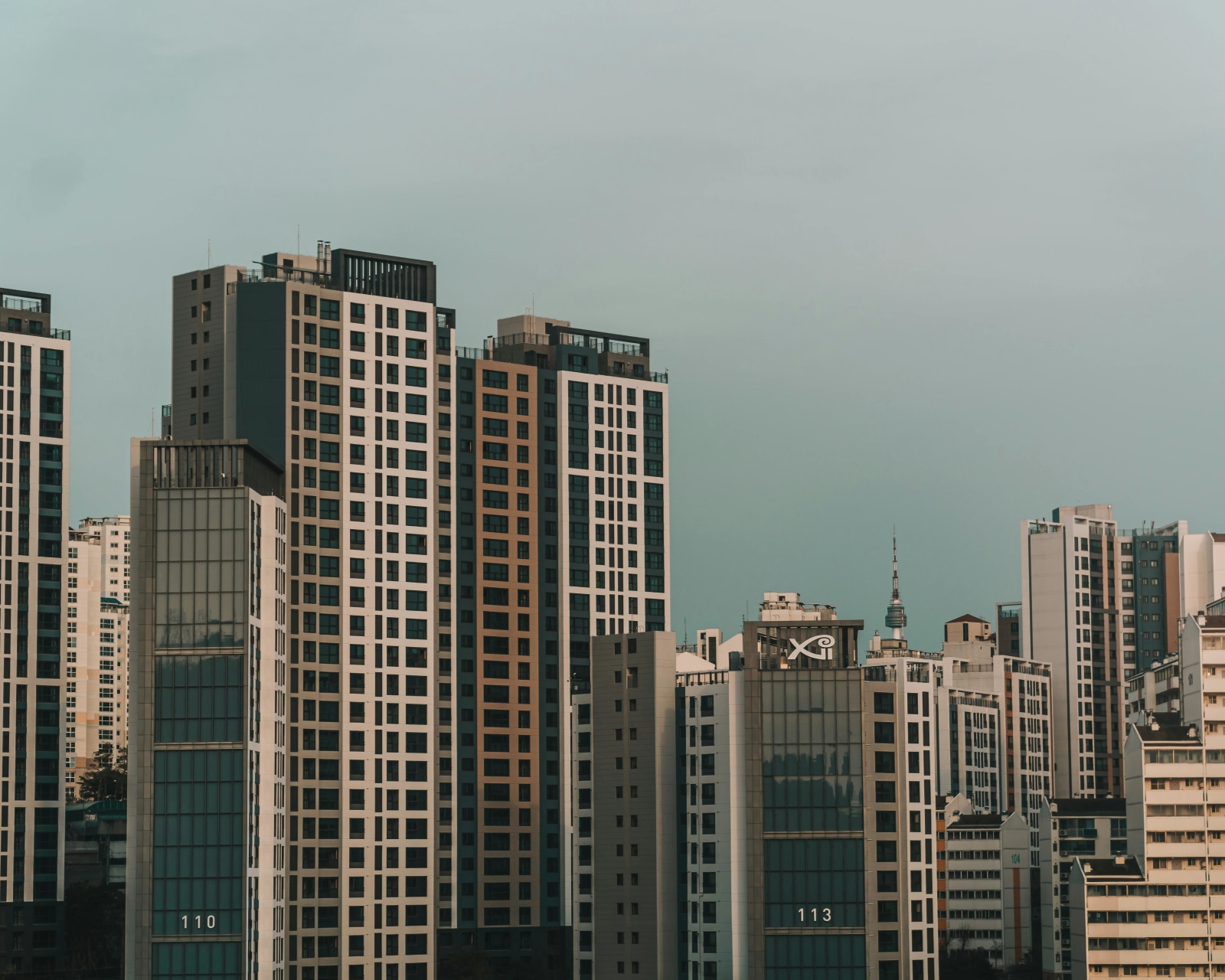
They're a two-hour flight apart and people lump them together — 'East Asia, megacities, great food, efficient trains' — but Tokyo and Seoul feel almost nothing alike on the ground. Tokyo is the quieter, older, more refined of the two: a city that runs on understatement, where the systems are invisible and the loudest thing on a packed train is sometimes a paper bag. Seoul is its opposite number — younger, faster, louder, and more relentlessly online, a city that reinvents its trends every few months and genuinely does not sleep.
If you've got one trip and you're choosing between them, the decision isn't about which is 'better' — both are world-class. It's about which energy you want. Do you want the polished, hyper-considered calm of Tokyo, or the 24-hour, hyper-connected churn of Seoul? Do you want refinement or intensity? Sushi counters and quiet temples, or 3 a.m. Korean BBQ and a skincare haul at midnight?
I've spent serious time in both. This is an honest comparison — what each city actually feels like, where to eat and stay, what you'll spend, and the kind of trip each one delivers. If you've already read the Tokyo vs Osaka comparison, think of this as the next decision up: not which Japanese city, but which Asian capital.
First Impressions: Order vs. Intensity
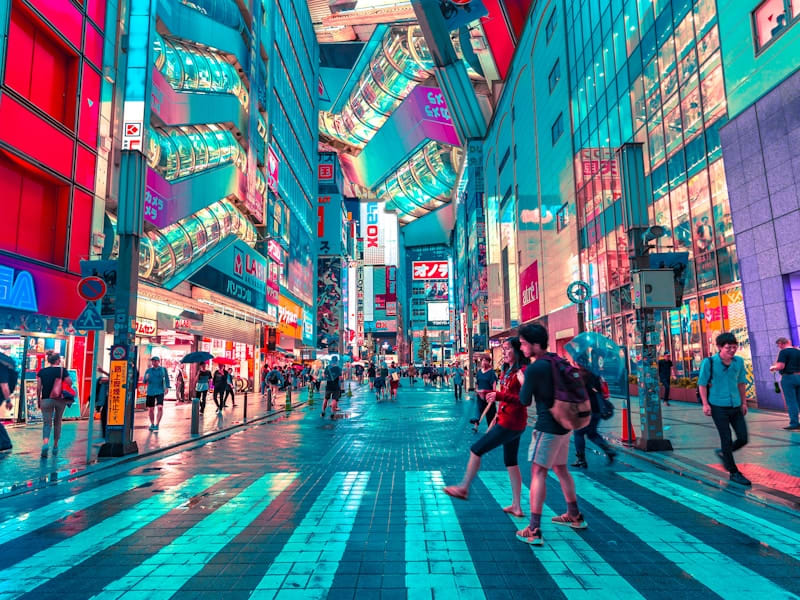
Tokyo lands on you quietly. You arrive at Haneda or Narita, glide into the city on a spotless train, and the first thing you notice is the restraint: nobody talks loudly, nobody honks, queues form themselves, and even the chaos of the Shibuya Scramble — a thousand people crossing at once — feels choreographed. The social contract is consideration, and you feel it as a visitor: change handed back with two hands, taxi doors that open themselves, a tiny tray for your convenience-store receipt. Tokyo's energy is enormous but compressed, held in by an unspoken civic politeness.

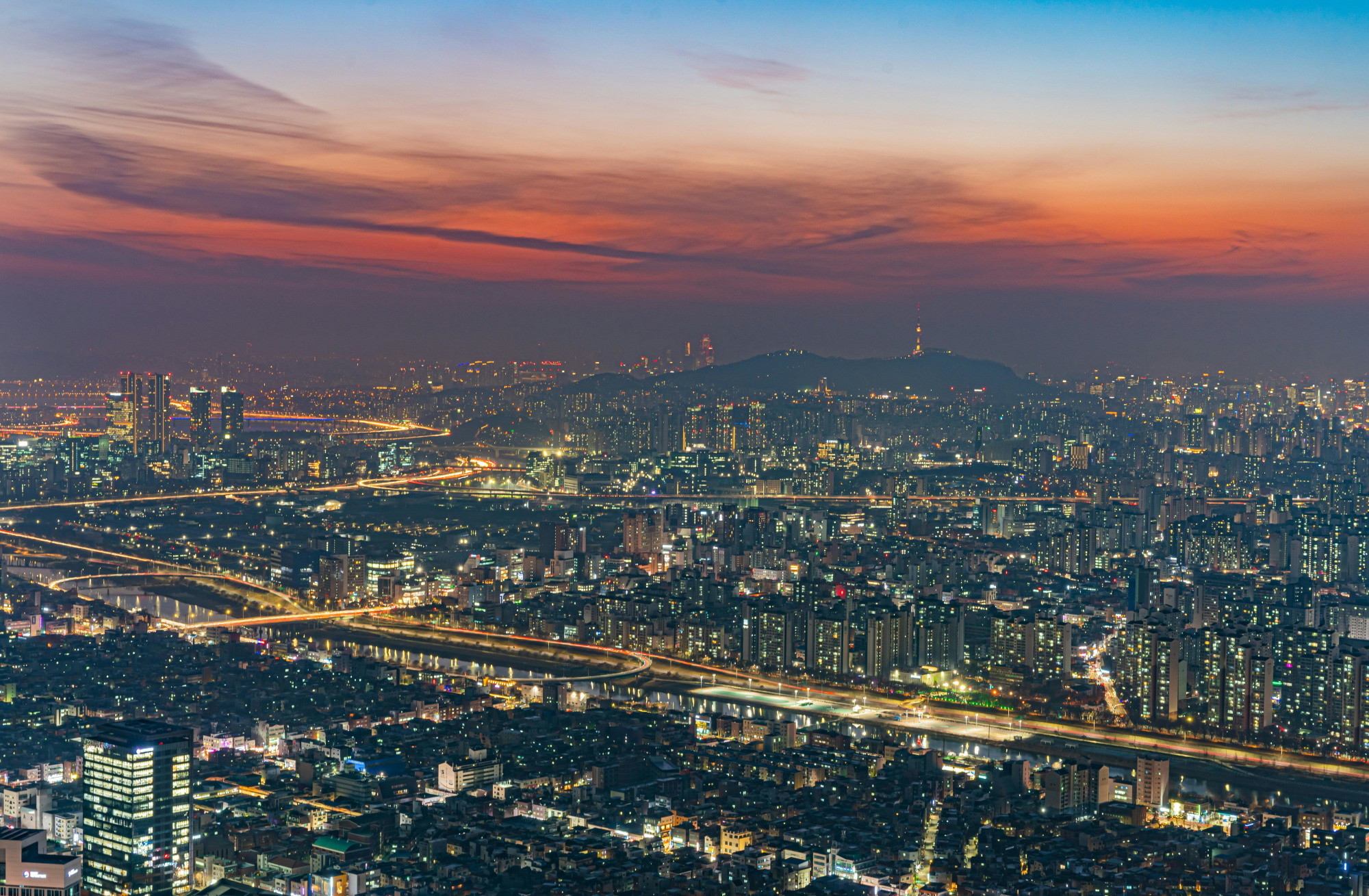
Seoul hits differently. It's faster, more frontal, more in-your-face in the best way — a city wired to the eyeballs, where everything is delivered, app-ordered, livestreamed, and open late. The streets of Hongdae or Gangnam pulse with K-pop from storefronts, glowing signage stacked ten floors high, and crowds of students and office workers flowing between barbecue joints, cafés, and karaoke rooms until dawn. Where Tokyo glamorizes calm, Seoul glamorizes momentum: the newest café, the trendiest neighborhood, the latest everything. And ringing all of it are actual mountains — you can hike a granite peak in the morning and be in a neon-lit night market by evening.

The Food Question: Refinement vs. Fire
Tokyo holds more Michelin stars than any city on earth and the food culture is one of refinement and quiet mastery — sushi counters where one chef has made the same nigiri for forty years, ramen shops with a queue at 11 a.m. and a 'no photos, no conversation' sign, tempura monitored to the degree. At its best, eating in Tokyo feels like watching someone do one thing better than anyone alive. It's often a solo, focused, almost meditative act — even the cheap meals (a $5 standing soba, a conbini onigiri) are quietly excellent.
Seoul's food culture is communal, social, and loud. The defining meal is Korean barbecue — you grill marinated meat at your own table, wrap it in lettuce with garlic and ssamjang, pour rounds of soju, and the whole thing is a group sport that runs for hours. Then there's the street food (tteokbokki in chili sauce, hotteok, fish-cake skewers), the fermented backbone (kimchi at every meal), the spice that Japanese food largely lacks, and the late-night ritual of chimaek — Korean fried chicken and beer at midnight. Seoul food is built for sharing, drinking, and staying out; Tokyo food is built for precision. Seoul is also notably cheaper to eat well in.
Tokyo asks you to sit still and pay attention. Seoul asks you to pull up a chair, share the grill, and stay another round.
Five things to eat in each city
- Tokyo — Sushi at the Tsukiji outer market for breakfast, standing at a counter at 7 a.m.
- Tokyo — A bowl at a queue-around-the-block ramen shop (try a tonkotsu or a Tokyo shoyu)
- Tokyo — Tonkatsu at an old Meguro institution, or tempura at a counter where the oil is watched to the degree
- Tokyo — A neighborhood izakaya crawl in Ebisu or under the Yurakucho train tracks
- Tokyo — Coffee at a kissaten (old-school cafe) where a pour-over takes 12 unhurried minutes
- Seoul — Korean BBQ (samgyeopsal or galbi) grilled at your table with soju, the essential group meal
- Seoul — Chimaek: Korean fried chicken and cold beer, ideally at 11 p.m.
- Seoul — Tteokbokki and fried snacks from a Myeongdong or Gwangjang Market street stall
- Seoul — A bubbling stew (kimchi jjigae or sundubu) with endless free banchan side dishes
- Seoul — A late-night dessert café — Seoul's café scene is its own obsession, open till the small hours
Neighborhoods That Define Each City
Tokyo is thirteen cities stitched together by the Yamanote loop. Shibuya is the neon-and-crossing Tokyo of the postcards; Shinjuku scales that up with the biggest station on earth and the seedy-glamorous Kabukicho behind it; Asakusa is old Tokyo, with the Senso-ji temple and Edo-era shopping streets; Ginza is the polished, expensive, suit-and-tie flagship district. Each has a distinct personality, and getting between them is a 10–30 minute train ride.

Seoul splits along the Han River. To the north sit the historic and youthful districts: Myeongdong for shopping and street food, Hongdae for the student nightlife, indie music, and clubs, Insadong and Bukchon Hanok Village for traditional culture and tea houses, Itaewon for international food. South of the river is Gangnam — the glossy, affluent, plastic-surgery-and-luxury-retail Seoul that the song made famous — plus the boutiques of Garosu-gil. The defining Seoul move is contrast: a 600-year-old palace (Gyeongbokgung, with its hourly guard-changing ceremony) one stop from a hyper-modern shopping megaplex.

Nightlife and the 24-Hour Question
This is the single biggest practical difference, and it can decide your trip. Seoul genuinely does not sleep: restaurants, cafés, bars, karaoke rooms (noraebang), and 24-hour jjimjilbang bathhouses run all night, the subway goes until around midnight but night buses and cheap taxis fill the gap, and entire districts (Hongdae, Gangnam, Itaewon) are busiest at 2 a.m. If your ideal trip involves staying out late, ordering fried chicken at 1 a.m., and sweating it out in a sauna at dawn, Seoul is built for you.
Tokyo's nightlife is excellent but more bounded. The crucial catch is the last train, which runs around midnight to 1 a.m. — miss it and you're either paying for a pricey taxi across a vast city or waiting it out until 5 a.m. (which plenty of people do, in an izakaya, a bar in Golden Gai, or a capsule hotel). Tokyo nightlife is more about the perfect small bar — a six-seat counter in Golden Gai, a jazz kissa, a high-end cocktail den — than Seoul's roaring, all-night, anything-goes sprawl. Both are great; they're great in completely different ways.
Budget Reality: How Much Will You Spend?
Both cities are more affordable than first-timers expect, and both have superb, cheap public transit. Tokyo has gotten notably cheaper for foreign visitors thanks to the weak yen of the last couple of years — food in particular is a bargain for a city its size. But across the board, Seoul still tends to run cheaper than Tokyo, especially on accommodation and eating-and-drinking out: a Korean BBQ-and-soju night for two is hard to beat on value, and mid-range hotels are a notch less than Tokyo's. Tokyo edges ahead on the very cheapest transit and the sheer density of sub-$10 excellent meals.
| Category | Tokyo (USD/day) | Seoul (USD/day) |
|---|---|---|
| Hotel — mid-range 3★ | $110–170 | $80–140 |
| Food (3 meals + snacks) | $40–65 | $30–55 |
| Local transit | $6–12 | $4–9 |
| Attractions / entry fees | $12–28 | $8–20 |
| Coffee / drinks out | $12–22 | $10–20 |
| Total per day (mid-range) | $180–295 | $130–245 |
| 5-day trip estimate | $900–1,475 | $650–1,225 |
Grab a Suica or Pasmo in Tokyo and a T-money card in Seoul — both tap onto every subway, bus, and many convenience stores. Seoul has a genuine edge on connectivity: blanket free public Wi-Fi, the fastest mobile internet anywhere, and an everything-delivered app culture. Tokyo's English signage is slightly more comprehensive in the deep side streets, but both are very navigable with a translation app.
Day Trips and Getting Out of the City
Tokyo's day trips lean scenic and traditional: Hakone for onsen and Mt. Fuji views, Nikko for ornate mountain shrines, Kamakura for the Great Buddha and surf-town temples, and Fuji itself in climbing season. The Shinkansen also puts Kyoto and Osaka within easy reach if you want to extend. Seoul's day trips skew historical and dramatic: the DMZ and JSA on the North Korean border (a genuinely unique half-day), the island-and-lake scenery of Nami Island, the UNESCO fortress at Suwon, and the granite ridges of Bukhansan National Park, which sits right at the city's edge.
Seoul's Incheon (ICN) is routinely rated among the best airports in the world, with a fast rail link into the city. Tokyo has two: Haneda (HND), which is close and convenient (aim for it), and Narita (NRT), which is 60–90 minutes out. A popular Asia-trip hack is to combine both cities — fly into one, out of the other — since they're a short, cheap two-hour hop apart.
The Verdict: Who Each City Is For
Choose Tokyo if you want refinement, order, and depth — if you love watching a city work, if you want quiet mastery in your food, if you're drawn to the contrast of ancient temples and hyper-modern design, and if a calmer, more considered urban experience appeals. Tokyo is the better pick for first-timers to Asia (the infrastructure and English support are slightly smoother), for design and architecture obsessives, for solo travelers who want anonymity, and for anyone who finds the idea of an all-night city more exhausting than exciting.
Choose Seoul if you want energy, immediacy, and a city plugged directly into the present tense — if you love staying out late, if you came for the food-as-group-sport of Korean BBQ and the chaos of a night market, if K-culture (beauty, fashion, music, drama) is a draw, and if you'd rather a city come at you than have to go find it. Seoul is also the better value, the better nightlife, and the more youthful, trend-driven trip. It's the wrong pick only if your dream is calm, quiet, and traditionally 'serene' — that's Tokyo's lane.
They're two hours and a cheap flight apart, and they're so different that doing both back-to-back is one of the best one-trip pairings in Asia. A 9–10 day trip split as Tokyo (4–5 days) then Seoul (4–5 days) — or the reverse — gives you the full contrast: refinement then intensity, restraint then momentum. If you only have time for one, pick by energy, not by 'which is better.' Neither will disappoint.