As of 2026, the must-see places in Osaka include Osaka Castle, Shitenno-ji Temple, Sumiyoshi Taisha Shrine. See highlights, time needed and tips for each below.
Osaka blends historic landmarks, natural scenery, and local food experiences. We've organized 19 attractions across 4 categories. Each attraction card includes entry fees, opening hours, and local tips so you can plan straight from the page. Use the quick links below to jump to your favorite category.
Built in 1583 by Toyotomi Hideyoshi, the warlord who briefly unified Japan. The current keep is a 1931 reconstruction with a history museum inside, but the 8th-floor observation deck delivers a 360° view of central Osaka. In late March and early April, 3,000 cherry trees ring the moat, making this one of the top three cherry blossom spots in the country.
Hours9:00-17:00 (extended in cherry blossom season)
Time1.5-2 hours
Local Tip
Arrive at 9 AM opening to skip 30-40 minute keep queues. During hanami, the Nishinomaru Garden ($1.30 extra) is the only spot to capture cherries + keep in one frame. Free entry to the keep with the Osaka Amazing Pass.
2
Shitenno-ji Temple
Japan's first official Buddhist temple, founded by Prince Shotoku in 593 CE. The five-story pagoda, central gate, and main hall sit in a perfect line — a layout (Shitenno-ji style) that became the template for later Japanese temples. Despite being central, it gets a fraction of the crowds at Tokyo's Senso-ji.
Visit Info
PriceGrounds free; Inner halls $2 / ¥300
Hours8:30-16:30
Time1-1.5 hours
Local Tip
On the 21st and 22nd of every month, a flea market fills the grounds — antiques, used kimonos, handmade crafts at local prices. Worth timing your visit around if you can.
Sumiyoshi Taisha Shrine
One of Japan's three oldest Shinto shrines, founded in 211 CE. Predates the Chinese Buddhist influence on shrine architecture, so the design is uniquely 'Sumiyoshi-zukuri' — straight-line roof, no curves. The arched Sorihashi Bridge over the lotus pond is the photo spot, and the New Year's gathering here draws 2 million visitors over three days.
Visit Info
PriceFree
Hours6:00-17:00 (varies seasonally)
Time45 min - 1 hour
Local Tip
20-min ride south on the Nankai Line from Namba. Far quieter than Shitenno-ji and arguably more architecturally distinctive. Walk past the Sorihashi Bridge to feel the layout from a worshipper's perspective.
4
Tsutenkaku Tower
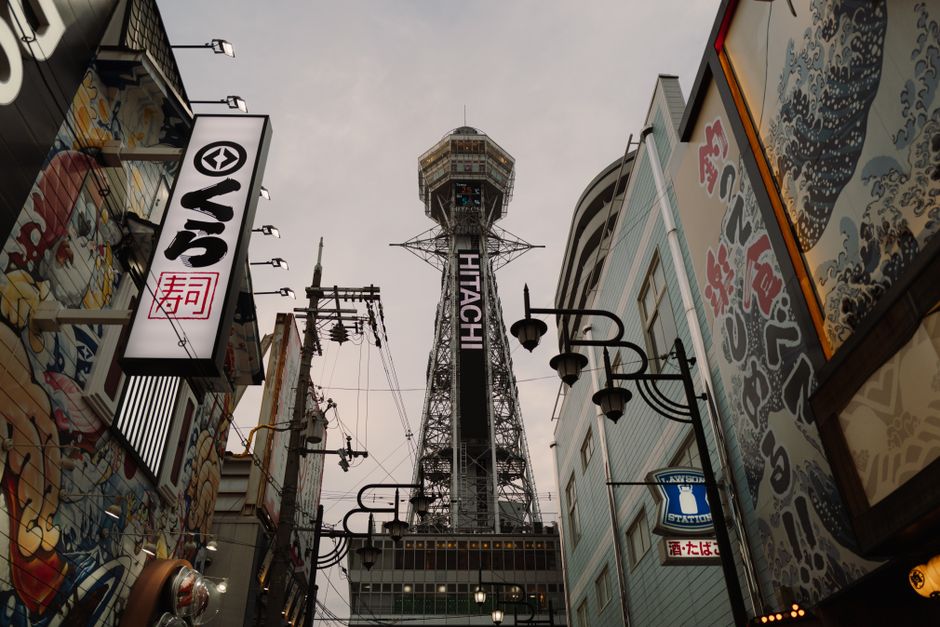
The 108m tower at the center of Shinsekai — built 1956 as a reconstruction of the 1912 original, modeled after the Eiffel Tower. The Showa-era observation deck is dated compared to Umeda Sky and Abeno Harukas, but the city view with Mt. Ikoma to the east is uniquely Osaka, and the Billiken statue inside (rub his feet for luck) is the local quirk.
Visit Info
Price$6 / ¥900 (free with Osaka Amazing Pass)
Hours10:00-20:00 (last entry 19:30)
Time45 min - 1 hour
Local Tip
Visit 30 min before sunset to catch both day and night views. The under-the-tower kushikatsu alley is the proper post-tower dinner — Daruma Honten is two blocks away.
5
Abeno Harukas
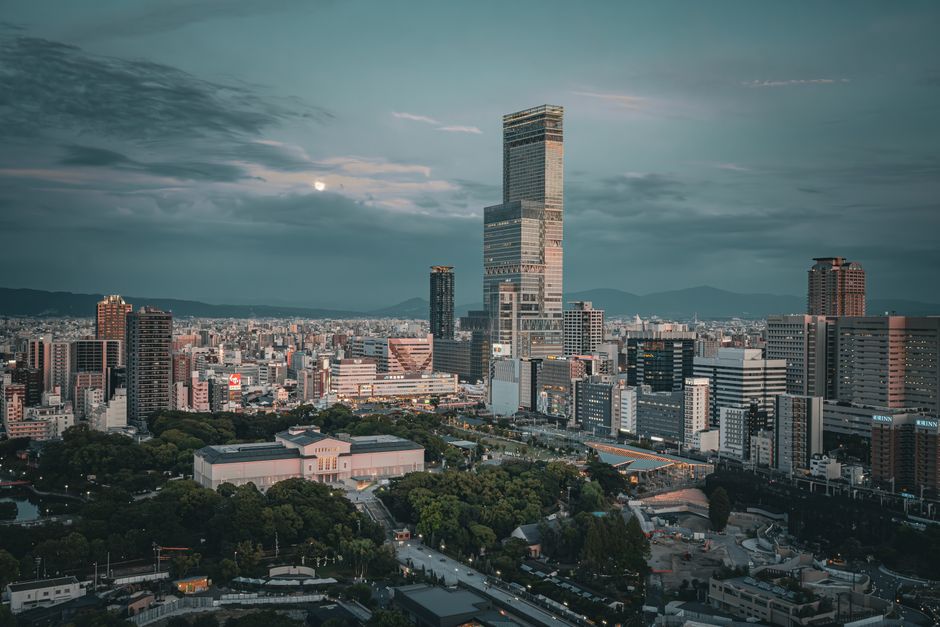
Japan's tallest building when it opened in 2014 — 300m, 60 floors. The Harukas 300 observation deck on the 58th-60th floors is the highest view in Osaka, with a glass-floor section that drops 288m. On clear days you can see Kobe to the west and Kyoto to the north.
Visit Info
Price$15 / ¥2,200 observation deck
Hours9:00-22:00 (last entry 21:30)
Time1 hour
Local Tip
Visit at sunset for the dual day-night view. The Marriott Miyako Hotel occupies floors 38-55 — book a room here for the highest hotel views in Osaka.
Food & Markets
5 spots
1
Dotonbori
The street that defines Osaka in every guidebook photo. Glico running-man billboard (1935 original, sixth iteration), giant moving crab sign, pufferfish lanterns — the signage itself is the attraction. Takoyaki, okonomiyaki, kushikatsu, and grilled squid are all available within one block. The downside is density — after 7 PM you're shoulder-to-shoulder with other tourists.
Go after sunset for the neon-on-water effect. Ebisubashi bridge in front of the Glico sign is the photo spot — when crowded, shoot from the opposite riverbank. Walk one block off the main strip for 10-20% lower prices at identical chain restaurants.
Kuromon Market
A 170-year-old covered market with around 150 stalls selling tuna sashimi, sea urchin, prawns, melons, and wagyu. The appeal is that vendors grill or slice your selection on the spot. Be honest about the trade-off: prices are 20-30% above non-tourist neighborhoods. One alley off the main lane and the price drops visibly.
10 AM to noon is freshest and busiest. Avoid Mondays — half the stalls close. Step one alley off the main strip for noticeably lower prices on identical products. Maguroya Kurogin's tuna trio plate ($10 / ¥1,500) is the survey-the-fish move.
3
Shinsekai & Kushikatsu
A retro neighborhood from 1912 centered on Tsutenkaku tower. Showa-era neon, the Billiken statue (rub his feet for luck), and decades-old food stalls give it the feel of stepping back 50 years. Best at night when the neon comes alive. The local rule is sacred: do not double-dip your kushikatsu in the shared sauce.
Visit Info
PriceKushikatsu $0.75-2 / ¥110-300 per skewer; Tsutenkaku $6 / ¥900
Hours11:00-22:00
Time1.5-2 hours
Local Tip
Daruma Honten (founded 1929) is the original kushikatsu joint — every table has the no-double-dipping sign. For Tsutenkaku, time your entry for 30 minutes before sunset to catch both day and night views.
Hozenji Yokocho
A 180m stone-paved alley parallel to Dotonbori — feels 100 years older despite being half a block away. The Mizukake Fudo statue at the entrance is covered in moss because visitors splash water on it for luck (the moss is the point). Small bars and izakayas line both sides; the lane is quieter and more atmospheric than Dotonbori one block north.
Visit Info
PriceFree to walk; drinks $5-15 / ¥750-2,250
HoursOpen 24h (most bars 17:00-24:00)
Time30-45 min walk
Local Tip
Splash water on the Mizukake Fudo statue. Photogenic at dusk when the stone glows. Most bars are 5-8 seat counters — single travelers fit better than groups.
5
Tenjinbashisuji Shopping Arcade
Japan's longest covered shopping arcade at 2.6 kilometers. 800+ shops — old-school stationery stores, used kimonos, kitchen tools, fresh produce, izakayas. Tenma Station to Minamimorimachi Station from end to end takes about 30 minutes at a brisk walk. The southern half (Tenma side) has the densest standing-izakaya scene in Osaka.
Visit Info
PriceFree walking; shopping varies
HoursMost shops 10:00-20:00; izakayas 17:00-24:00
Time1.5-3 hours
Local Tip
Start at JR Tenma Station and walk south. The Tenma 4-chome area has 150+ standing-bars within five blocks; pick by smell and crowd. Banpaiya is the gateway izakaya.
Theme Parks & Family
4 spots
Universal Studios Japan (USJ)
Since Super Nintendo World opened in 2021, USJ has been arguably the best theme park in Japan. The Mario Kart Bowser's Challenge ride uses augmented-reality headsets in a way the US Universal parks don't. Other headliners: Harry Potter Forbidden Journey (the original 2014 ride), Jurassic Park The Ride, Hollywood Dream backwards coaster. The pain point is wait times — even weekdays hit 2 hours on top rides. Without an Express Pass, expect 2-3 rides total in a day.
On weekends and Japanese holidays, book ticket + Express Pass at least one week ahead online — same-day sells out routinely. Mario and Harry Potter zones may issue free timed-entry tickets via the official app on busy days; arrive 30 minutes before opening to claim one. The Single Rider line cuts queues by 60-80% if you're alone.
2
Osaka Aquarium Kaiyukan
One of the world's largest aquariums. The signature exhibit is a 9-meter-deep central tank where whale sharks swim among rays and tuna. 15 zones, 620 species, 30,000 animals. The route descends in a spiral so you see the same tank from multiple levels.
Visit Info
PriceAdults $18 / ¥2,700; children $8 / ¥1,200
Hours10:00-20:00
Time2-3 hours
Local Tip
Night Kaiyukan tickets after 5 PM are $16 / ¥2,400. Lighting is lower at night which makes the whale shark exhibit more atmospheric. Pair with the Tempozan Ferris Wheel ($5 / ¥800) next door for a solid half-day.
3
Umeda Sky Building Floating Garden
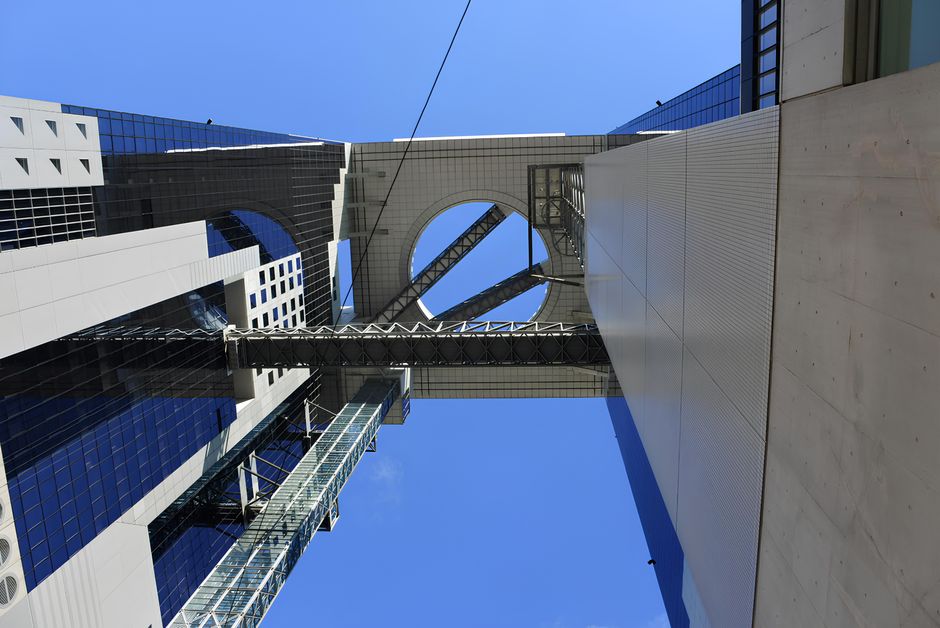
Two 173m towers connected at the top by an open-air rooftop observatory — Osaka's signature architectural photograph. The Floating Garden walkway gives full 360° views with the wind in your face. Cold and windy in winter; cinematic at sunset. The towers themselves were designed by Hiroshi Hara, the same architect behind Kyoto Station.
Visit Info
Price$10 / ¥1,500 (free with Osaka Amazing Pass)
Hours9:30-22:30 (last entry 22:00)
Time1-1.5 hours
Local Tip
Arrive 30 min before sunset for the day-to-night transition. The basement Takimi-koji food alley is a recreation of a 1920s Osaka shopping street and is free to walk — good pre-or-post observatory stop.
HEP Five Ferris Wheel
The 75m red ferris wheel attached to the top of HEP Five shopping mall in Umeda. Built 1998; one of Osaka's most photogenic skyline anchors alongside the Glico sign and Tsutenkaku. The 15-min ride passes 106m at peak, with skyline views over the corporate Kita district.
Visit Info
Price$5 / ¥800 (free with Osaka Amazing Pass)
Hours11:00-22:45
Time30 min including queue
Local Tip
Sunset to early evening is the best window. Each cabin holds 4 — solo riders may get matched with strangers on busy days. The mall itself is youth-fashion focused (think Tokyo's 109 in Shibuya).
Day Trips & Nature
5 spots
Kyoto (15 min by JR Special Rapid)
#1
The cultural capital of Japan is 15 minutes from Osaka Station by JR Special Rapid ($4 / ¥570). Fushimi Inari's 10,000 vermillion torii gates, the Kinkaku-ji Golden Pavilion, the Arashiyama bamboo grove, and Gion's geisha district all fit into a single day if you start at sunrise. Kyoto-base hotel prices spike 50-100% during cherry blossom and autumn foliage; day-tripping from Osaka cuts the cost without losing the access.
Round-trip $8 / ¥1,140 by JR; Hankyu $5.30 / ¥800 (closer to Gion) Plan a 12-hour day Full day
Local tip: Fushimi Inari at sunrise (6 AM arrival) is the move — by 9 AM tour buses crush the lower torii path. Hankyu Kyoto Line drops you closer to Gion than JR; use JR Special Rapid for the speed, Hankyu for the location.
Nara (35 min by Kintetsu Line)
#2
1,200 free-roaming Sika deer that have learned to bow when you offer crackers. Todai-ji's 16m bronze Great Buddha is the headline temple; Kasuga Taisha's 3,000-lantern path is the secondary stop. Half-day is enough; full-day if you add Naramachi (the old merchant district) and kakinoha-zushi lunch.
Round-trip Kintetsu $10 / ¥1,200; Todai-ji $4 / ¥600 Park 24h; temples 7:30-17:30 Half to full day
Local tip: Kintetsu Line from Osaka Namba is faster than JR and drops closer to the park. Buy deer crackers (¥200 / $1.30) only from licensed vendors inside the park — proceeds go to deer welfare. Hide them until you're ready to feed.
Kobe (21 min by JR Tokaido Line)
#3
Port city sandwiched between mountains and the sea. Kobe beef at the source (lunch sets at Steakland $40-60 vs $100+ in Namba), the 1880s Kitano-cho foreign quarter with surviving Western-style mansions, Nankinmachi Chinatown, and the Mt. Rokko night view officially ranked among Japan's top three. Half-day for food; full-day with Mt. Rokko.
Round-trip JR $8 / ¥850; Mt. Rokko cable $13 / ¥1,950 round-trip Plan a 10-hour day with Mt. Rokko Half to full day
Local tip: Steakland Sannomiya for the value Kobe beef lunch — walk-in capable. Mt. Rokko cable-car last departure is typically 9 PM summer, 5 PM winter; check before planning sunset. Bring layers — summit is 5-7°C cooler than the city.
Himeji Castle (60 min by JR Special Rapid)
#4
Japan's most spectacular original castle — built 1609, never destroyed in war, six floors of original wooden structure. Nicknamed 'White Heron' for its white plaster walls. The combo ticket with Koko-en garden ($10 / ¥1,500) is the right buy. UNESCO World Heritage Site.
Castle $7 / ¥1,000; combo $10 / ¥1,500; train $14 / ¥2,200 round-trip 9:00-17:00 (last entry 16:00) Full day with travel
Local tip: Arrive at 9 AM opening to skip tour-bus crowds. The climb to the top floor is steep original Edo-era wooden stairs — flip-flops won't work. Shinkansen Hikari is 30 min one-way ($15) vs Special Rapid 60 min ($7) — Special Rapid is the better value.
Mt. Koya (90 min by Nankai Line)
#5
UNESCO Buddhist temple complex at 800m altitude — the spiritual center of Shingon Buddhism since 819 CE. The Okunoin cemetery walk through 200,000 stone monuments and 1,000-year-old cedars is the centerpiece. 50+ temples offer shukubo (overnight monastery stays) with shojin-ryori vegetarian dinner and 6 AM prayer service. Needs an overnight to do properly.
Round-trip Nankai $30 / ¥4,500; shukubo overnight $80-180 / ¥12,000-27,000 Temples 8:30-17:00; cemetery walk 24h Overnight ideal; long day-trip possible
Local tip: Book shukubo 4-6 weeks ahead via Eko-in or Sekishoin (English-friendly). The Okunoin night walk (after dinner) is unforgettable — bring a flashlight. Mt. Koya is genuinely cold even in summer; pack layers.
Suggested Walking Routes
Half-day to full-day routes that hit the highlights without backtracking.
Dotonbori → Shinsaibashi Evening
About 4 hours
1
Glico billboard + Ebisubashi Bridge photo op17:00-17:30
Tip: Sunset just after 5 PM in spring/fall — golden hour for the canal
2
Takoyaki + okonomiyaki crawl on Dotonbori17:30-19:00
Tip: Hanadako, Chibo, and Wanaka are the three to hit
3
Don Quijote shopping + Glico Ferris wheel ride19:00-20:00
Three days of essential Osaka under $30/day not including transport. Castle grounds and shrines are free entry; kushikatsu is the cheapest sit-down meal in Japan at ¥100/skewer.
All four pillars of Osaka cuisine in 24 hours. Add a kuroge wagyu yakiniku dinner if you have the budget.
First-timers to Japan
Osaka as a Kansai base + day trips to Kyoto, Nara, Himeji
Cheaper hotels than Kyoto, more outgoing locals, and 4 distinct day trips within an hour. Best efficiency-to-experience ratio in Japan.
Practical Tips
Local know-how that saves you time and money on the ground.
1
Stand on the RIGHT on escalators in Osaka — opposite of Tokyo. People will stare if you stand on the left.
2
Hankyu Kyoto Line ($2.70 / ¥400 each way) is cheaper AND drops closer to Gion than JR. Use Hankyu for Kyoto trips, JR Special Rapid only if you have the JR Pass.
3
Buy USJ tickets a week ahead online — same-day sales sell out routinely on weekends and holidays. Express Pass on top makes the difference between 2 rides and 8 rides.
4
Kuromon Market: walk one alley off the main lane. Same products, 20-30% cheaper. Most stalls also close on Mondays.
5
Don't double-dip kushikatsu skewers in the shared sauce. Every shop has a sign about this. Take what you need on the first dip; that bowl is for everyone.
Getting Around
Osaka Metro's 9 lines plus the JR Loop Line cover essentially all of central Osaka. Get an ICOCA IC card at any station ($3.30 / ¥500 deposit, refundable on departure) — works on trains, buses, vending machines, and convenience stores. Single fares $1.20-2.20 / ¥180-330. Two-day-plus stays should buy the Osaka Amazing Pass ($19 / ¥2,800/day) for unlimited transport and 50 free attractions. Taxis start at $4 / ¥600 base — fine for short hops with 3-4 people.
Scams & Tourist Traps
▶
Dotonbori and Shinsekai night touts — 'free karaoke,' 'drink special,' or 'cute girl bar' invitations are bait for $150-300 table charges, cover fees, and forced bottle purchases. Just keep walking. Reputable bars don't have street touts.
▶
Namba and Umeda underground mazes — these stations have 50+ exit numbers, and Google Maps regularly drops you out the wrong side. Not a scam, just a time sink. Note your specific exit number before leaving the hotel ('Namba Station Exit 5').
▶
Airport-to-city taxi flat fares of ¥15,000-18,000 ($100-120) are normal — most drivers are honest, but rare cases route foreigners through toll roads without explaining. Confirm meter operation; highway tolls bill separately and that's legitimate.
Book Tours & Activities in Osaka
Booking online is typically cheaper than walk-up rates and reserves your spot.
Common questions about attractions and activities in Osaka.
What are the five must-see places in Osaka?
First, Osaka Castle ($4 entry). Built in 1583 by Toyotomi Hideyoshi as the symbol of Japan's unification — the 8th-floor observation deck gives a 360° view of central Osaka. In late March and early April, 600 cherry trees ring the moat as one of the top three hanami spots in Japan. Second, Dotonbori at night. The Glico running-man billboard, the giant moving crab sign at Kani Doraku, takoyaki vendors, and a canal walled with neon — all packed into three blocks. Third, the Umeda Sky Building Floating Garden Observatory ($16, 173m). The bridge spanning the two towers gives one of the best Osaka night views — the signature shot. Fourth, Shinsekai + Tsutenkaku. The neighborhood was built for the 1903 World Expo; the 1912 Tsutenkaku tower sits at its heart, and the surrounding kushikatsu alleys are the essence of Japanese working-class food. Fifth, Universal Studios Japan ($58–76). Japan's only Universal Studios — Super Nintendo World, Harry Potter, and Minions are the three differentiators. Three days fits these five core spots; five days adds Kyoto and Kobe day trips; seven days adds Nara, Himeji, and Mt. Koya.
What can you do in Osaka for free or nearly free?
Osaka Castle Park (the castle keep entry is separate, but the park itself is free) is the city's top cherry blossom spot with 600 trees — peaks in the first week of April. Dotonbori at night is a free walk (Glico sign, Kani Doraku crab sign, neon-lit canal). Shinsaibashi shopping arcade + Amerikamura (America Village) — free strolls. Tsuruhashi Koreatown's kimchi market, Korean food stalls, and hanbok shops are a free atmosphere. Hozenji Yokocho — the stone-paved alley one block off Dotonbori with the moss-covered Mizukake Fudo statue — is free and one of Osaka's most photogenic hidden spots. The outer grounds of Shitennoji Temple are free; Expo '70 Commemorative Park is ¥260 ($1.70) — practically free, and its 'Tower of the Sun' sculpture is iconic. The Expo Park's plum, cherry, and cosmos seasons are also free walking.
Which Osaka attractions are expensive, and how do I save?
Universal Studios Japan ($58–76 day pass) and the USJ Express Pass ($35–80 add-on) are the priciest. Book USJ via the official app in advance and go on a weekday for the best value. Kaiyukan Aquarium ($17), Umeda Sky Building Observatory ($16), Abeno Harukas 300 Observatory ($18), and Osaka Castle keep entry ($4) — even all combined are half the price of equivalent NYC attractions. The 'Osaka Amazing Pass' (1-day $20, 2-day $32) covers Osaka Castle, Umeda Sky, Abeno Harukas, Kaiyukan, plus unlimited metro — pays back after two attractions. The 'JR Kansai Wide Area Pass' (5-day, $76) gives unlimited Osaka–Kyoto–Kobe–Himeji–Nara — unbeatable for regional travel. Also consider the 'Kintetsu Rail Pass' for Nara and Mt. Koya. Use regional passes by zone, not by city.
What are the best day trips from Osaka?
Kyoto is 15 minutes by JR Special Rapid (¥570 / ~$3.80 one-way) — Kiyomizu-dera, Gion, Arashiyama, and Fushimi Inari all fit in a single day. Nara is 30 minutes by Kintetsu (¥640 / ~$4.30) — Todai-ji Great Buddha, the deer park, and Naramachi alleys take 4–5 hours. Kobe is 21 minutes by JR Special Rapid (¥420 / ~$2.80) — one of Japan's three great night views from Mt. Rokko, plus Nankinmachi (Kobe Chinatown) and Sannomiya. Himeji is 60 minutes by JR Special Rapid (¥1,520 / ~$10) — Himeji Castle (one of Japan's three premier castles, UNESCO World Heritage, founded 1333) is the centerpiece. Mt. Koya is 90 minutes via Nankai (¥1,990 / ~$13) — Japan's Shingon Buddhism sacred mountain with 117 temples and monasteries (overnight stay at a working monastery is the signature experience). All five day trips are covered by the JR Kansai Wide Area Pass 5-day.
Where is Osaka good for kids?
USJ is the top pick — Super Nintendo World (opened 2021), Harry Potter, and Minions, plus Japan's only Universal Studios. JR Sakurajima Line is 12 minutes from Osaka Station, so it pairs well with a city itinerary. Kaiyukan Aquarium ($17 — one of the world's largest, plus a whale shark) pairs with the Umeda Sky Building and the Hep Five Ferris wheel for a kid-friendly Umeda day. Expo '70 Commemorative Park is a 260,000m² park with the giant 'Tower of the Sun' sculpture, Japan's largest natural history museum, cycling, and mini-golf — extremely family-friendly. Tennoji Zoo sits next to Shitennoji Temple and Abeno Harukas — all walkable. Osaka Castle Park is a great family stroll, especially during the April cherry blossom season. Skip Dotonbori at night with younger kids — crowds, smoking, and drinking dominate.
Where are the best Osaka night views and sunset spots?
The Umeda Sky Building Floating Garden Observatory ($16, 173m) is the top Osaka night view — a 360° view of central Osaka from the bridge connecting the two towers. The Abeno Harukas 300 Observatory ($18, 300m — among Japan's tallest buildings) shows southern Osaka, Shitennoji, and the Shinsekai night view. Tsutenkaku ($7, 103m — Japan's first observatory tower, opened 1912) shows the Shinsekai alleys and a more working-class atmosphere. Osaka City Hall, Central Public Hall, and Nakanoshima's historic architecture also make free night-view spots. The Dotonbori canal walk at night — Glico sign, Kani Doraku, the neon reflections — is the top free pick. The Tsutenkaku + Shinsekai + kushikatsu alley combo is the essence of working-class Osaka at night. Book sunset slots at the observatories at least a week ahead.
What scams or rip-offs should I watch for in Osaka?
Osaka is safe even by Japanese standards, but Shinsekai and parts of Dotonbori have Kabukicho-style touts — 'cheap drinks/karaoke' pitches can mean surprise cover charges (otoshi/seki-ryo). Some Hozenji Yokocho and Dotonbori alley restaurants have English menus priced higher than the Japanese ones — check the Japanese menu. Never buy USJ tickets from informal sellers near the gate — official box office or app only. Costumed characters near Shinsaibashi and Dotonbori may demand tips for photos. Some Tsuruhashi Koreatown shops don't take foreign cards — bring yen. Foreign cards work at Japan Post and 7-Eleven ATMs only. Osaka, like Tokyo, enforces no-smoking zones (Umeda, Shinsaibashi) strictly — a ¥10,000 (~$67) fine if caught. Manner-watching pays off.
What are the lesser-known local spots most tourists miss in Osaka?
Tsuruhashi (JR Tsuruhashi Station) is Japan's largest Koreatown — 3rd–4th generation Korean-Japanese (zainichi) neighborhood from the colonial era. 200 kimchi shops, Korean restaurants, hanbok stores, and a 24-hour horumon (offal) alley are the real Osaka food scene. Fukaeibashi (深江橋) and Noda (野田) are non-tourist neighborhoods where everyday working-class Osaka actually lives. Horie (堀江) — between Umeda and Shinsaibashi — is the small trendy district with vintage shops, indie cafes, and design boutiques. Tenmabashi and Nakazakicho (中崎町) are Osaka's indie cafe, secondhand, and subculture core, with the same vibe as Tokyo's Shimokitazawa. Whity Umeda (the 11,000-tsubo underground arcade with 400 stores) goes deeper than Tokyo's Shinjuku underground — perfect for rainy-day shopping and meals. Osaka's Michelin scene — 'Sushi Haraguchi' (★★), 'Kaho', 'Taishou Hokakei' (kaiseki) — is the original Japanese fine-dining tier. The Osaka nickname 'kuidaore' (食い倒れ — 'eat until you fall over') is real: 24-hour street food crawls alone will fill an entire trip.
More on Osaka
Cost guide, itineraries, hotel picks — everything in one place.
Jimmy Kong
TripPick founder · Travel content creator
Based in Chiang Mai for 8+ years, with 30+ countries visited across Southeast Asia, Japan, and Europe. Every detail in this guide is primary-source verified as of April 2026, with prices auto-refreshed via live exchange rate APIs. This isn't AI-generated boilerplate — it's written from the perspective of someone who has actually been there.
8+ years analyzing travel data
30+ countries visited
Live exchange rate verified
 Japan
Japan 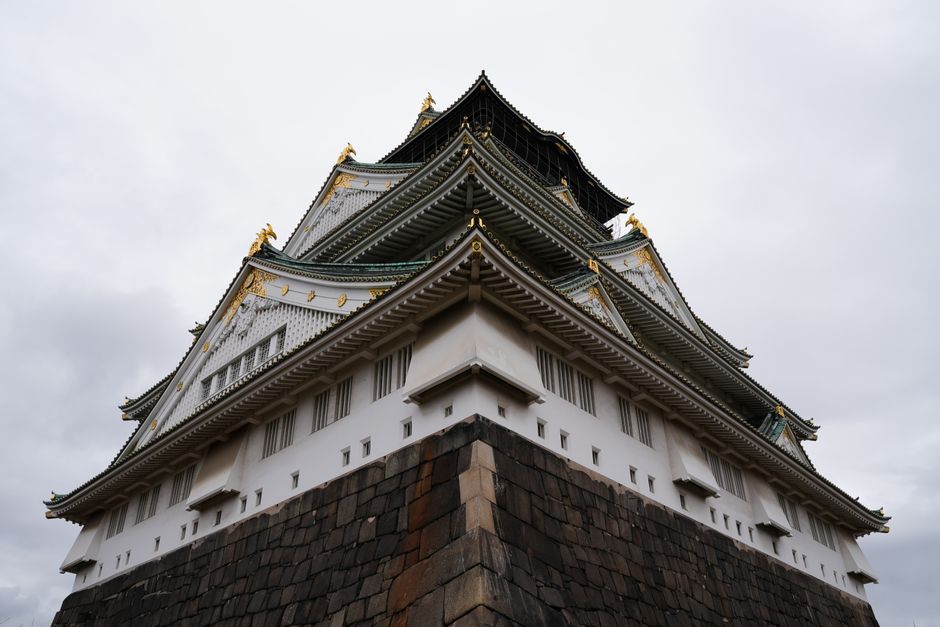 1
1